
YouTube Script Generator: What to Look For (and Avoid)
Most AI YouTube scripts sound the same and cite nothing real. Here's the checklist a youtube script generator needs to pass before you trust it with a 20-minute video.
Key Takeaways
- A November 2025 Deakin University study found 56.2% of GPT-4o’s literature-review citations were fabricated or factually wrong — the same confident-and-ungrounded pattern shows up when a chatbot writes your script’s opening stat.
- YouTube’s own analytics name the first 30 seconds a tracked checkpoint; a general chatbot has no concept of that cliff and defaults to a greeting and a preview instead of an open loop.
- A 20-minute video is 6–10 chapters, each needing its own pacing and micro-hook — something no chatbot models unless you build the outline yourself and feed it back in section by section.
- The real test isn't the first draft, it's revision: changing one line should update that line, not force a full regeneration of a script you already approved.
Paste “write me a YouTube script about intermittent fasting” into ChatGPT and you’ll have 1,200 words in under a minute. Paste it again tomorrow, on a different topic, and you’ll notice the same rhythm: three-item lists, a rhetorical question every few paragraphs, an intro that explains what the video is about instead of opening a loop. It’s competent. It’s also the reason so many channels that lean on a generic youtube script generator plateau at a few hundred views — the script reads like every other AI script on the internet, because it’s built from the same statistical average of the internet.
That’s the real failure mode, and it’s not really about quality in the abstract. It’s three specific things: the voice is generic because the model has no source material to differentiate it, the facts are unverifiable because nothing forces the model to cite where a claim came from, and the structure ignores retention math because a chatbot has no concept of a 30-second cliff. Fix those three and the tool becomes useful. Ignore them and you get fluent, well-formatted scripts that die in the YouTube algorithm before the two-minute mark.
This is a buyer’s checklist, not a tool ranking. Here’s what a script generator actually needs to do for long-form video, and where a general-purpose chatbot falls short of each requirement.
Why most AI-generated scripts underperform
No source grounding means no differentiation
A general chatbot writes from pattern-matched probability, not from research it did for your specific video. Ask it for a script on a niche topic and it will either hedge in vague generalities or state something specific and wrong with total confidence. A November 2025 study out of Deakin University, published in JMIR Mental Health, had GPT-4o generate six literature reviews and checked all 176 citations it produced: 56.2% were either completely fabricated or contained factual errors — dates, page numbers, and DOIs that didn’t match anything real. Only 19.9% were outright invented, but another 45.4% of the “real” ones had errors baked in. That’s not a scriptwriting study specifically, but the mechanism is the same one that shows up when a chatbot hands you a “did you know” stat for your hook: it sounds exactly as confident when it’s fabricating as when it’s correct, and you have no way to tell which from the output alone.
GPT-4o citation accuracy — Deakin University study, JMIR Mental Health, Nov. 2025
176
citations checked across six generated literature reviews
56.2%
fabricated or factually wrong
19.9%
outright invented
45.4%
“real” citations that still had errors baked in
Sources: StudyFinds, on the Deakin University / JMIR Mental Health study
Errors compound with length
As a generated script gets longer, small unsupported claims accumulate — a script is rarely wrong all at once, it’s wrong in three or four places scattered across 2,500 words, which is exactly hard enough to catch in a read-through and exactly damaging enough to sink a video’s credibility in the comments.No structure for a 30-second cliff
YouTube’s own analytics tooling is explicit about what the first half-minute does. In its guidance on measuring key moments for audience retention, YouTube defines the intro metric as “what percentage of your audience still watched your video after the first 30 seconds” and frames a high intro score as evidence that the opening matched what the thumbnail and title promised. A chatbot prompted for “a script about X” has no concept of that cliff. It will default to a greeting, a channel plug, and a table-of-contents-style preview — precisely the pattern that research on retention identifies as the weakest kind of open, versus a hook built on an unresolved question, a bold claim, or a result shown before its explanation.
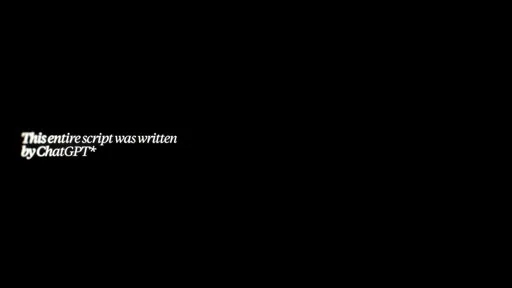
Creator Isaac (~213K subscribers) dramatizes this exact failure mode instead of just describing it, in How I Actually Write Viral Scripts. If you’d rather fix the structure yourself before reaching for any tool, our YouTube script template covers the hook, promise, and chapter pacing a generator has to reproduce.
The video opens with a stock AI-sounding hook — “I’ll reveal my secret five-step framework that guarantees viral” — before a second voice cuts in and admits it “took me like 30 seconds to generate,” because it was pasted straight out of ChatGPT. Isaac spends the rest of the video rebuilding the same script by hand, and the closing frame reveals the whole cold open you just watched actually was AI-written, on-screen text and all — a demonstrated version of the confident-and-generic problem this article opens with, not just an argument for it.
It took me like 30 seconds to generate.
— Isaac, How I Actually Write Viral Scripts
No chapter pacing, only paragraph pacing
A chatbot writes in paragraphs because that’s the unit it was trained to produce. A 20-minute video isn’t a long paragraph — it’s 6 to 10 chapters, each with its own micro-hook to survive the next drop-off point, each needing a different pace depending on whether it’s carrying new information or payoff. General-purpose tools don’t model that unless you build the outline yourself and feed it back in section by section, which is most of the actual work of scriptwriting anyway.
What a script generator has to do for long-form video
Five requirements separate a tool worth trusting with a full script from one you’ll spend as much time correcting as writing:
Research with citations you can check
Requirement 1 of 5
The generator should surface where a fact came from — a linked source, not a footnote it invented after the fact — before that fact ever lands in a sentence. If you can’t click through and verify a claim in under ten seconds, the tool hasn’t solved the hallucination problem, it’s just hidden it better.
Hook construction built around the drop-off curve
Requirement 2 of 5
Given that YouTube’s own analytics treat the 30-second mark as a named checkpoint, the tool should default to open-loop hooks — a claim, a question, a consequence — rather than greetings and previews, and should treat the first 30 seconds of script as a distinct unit worth its own draft pass, not the first paragraph of a longer one.
Chapter-level pacing, not just paragraph flow
Requirement 3 of 5
Long-form scripts need a visible chapter structure — where each section starts, what its job is (setup, tension, payoff, transition), and roughly how long it runs — so pacing decisions happen at the level retention actually breaks down at, not buried inside undifferentiated prose.
Sentence-level editability
Requirement 4 of 5
You will disagree with individual lines. A tool that only lets you regenerate the whole script, or the whole paragraph, forces you to either accept a sentence you don’t like or lose everything around it that was already right. Editability needs to go down to the sentence.
Revision without full regeneration
Requirement 5 of 5
This is the one that separates a demo from a production tool. Change one fact, one joke, one transition, and a script generator worth using should update that one spot — not silently rewrite the surrounding paragraphs, not force you to regenerate the whole 2,500-word script and re-read all of it to find what moved. Full regeneration on a small edit is how a reviewed, approved script quietly turns into an unreviewed one.
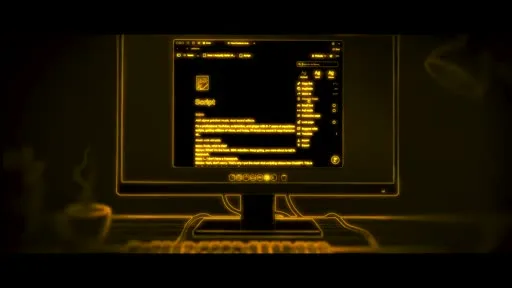
That’s what a finished script draft looks like when it’s actually broken into sections instead of one wall of prose — the same shape Isaac’s video shows on screen once his rewrite is done.
Chatbot vs. purpose-built script tool
| Criterion | General chatbot (ChatGPT/Claude) | Purpose-built script tool |
|---|---|---|
| Research with citations | No native web research by default in a plain chat; you paste in sources yourself, and claims can still be fabricated | Pulls and links sources as part of generation, so claims are traceable to something you can open |
| Hook construction | Defaults to intros/previews unless heavily prompted; no built-in model of retention curves | Retention-aware hook patterns (open loop, bold claim, cold open) as a default output shape |
| Chapter pacing | Writes continuous prose; you manually impose an outline and re-paste sections | Native chapter/section structure with pacing built into the generation step |
| Sentence-level editing | Edit by re-prompting and re-pasting, or by hand in a separate doc | Direct in-line editing at the sentence level inside the tool |
| Revision scope | Any change risks a full rewrite of surrounding text unless you paste in only the one paragraph | Changing one line regenerates that line, not the whole script |
| Voice consistency across episodes | No memory of your channel unless you re-supply context every session | Learns/holds a channel voice and reuses it |
| Cost model | Flat subscription regardless of output volume | Usually usage- or project-based, varies by tool |
None of this makes ChatGPT or Claude bad products — they’re extraordinary for research, brainstorming, and one-off writing tasks. The mismatch is specific: they weren’t built around the retention mechanics and revision workflow that a recurring long-form channel actually runs on, so a general-purpose model built for how to make YouTube videos with AI production at scale ends up needing scaffolding you build yourself, every time.
The rest of the pipeline still has to hold up
A script is one stage. Even a script with real citations, a strong 30-second hook, and clean chapter pacing still has to survive image generation, narration, and rendering without those stages reintroducing the same problems — a voice that drifts, timing that doesn’t match the narration, a full re-render because one image needed a fix. That’s the argument for treating scriptwriting as one connected stage of a production pipeline rather than a standalone output you export and hand off. This is where the case for a long-form AI video generator built around long-form specifically, instead of a general chat interface plus five other tools stapled together, gets concrete.
Longform Studio’s script stage is built around exactly the five requirements above: source-backed research with links you can check, hooks and chapter pacing built for the 8–30 minute format the tool targets, sentence-level editing inside the script itself, and revision that touches only what you changed — not a full regeneration that makes you re-review a script you already approved. It’s one stage inside a workspace that carries the same script, voice, and visual continuity through image generation and narration, rather than a chat window you copy text out of. You can see the full workflow at Longform Studio.
FAQ
Is ChatGPT good enough to write a full YouTube script?
For a first draft or brainstorming pass, yes. For a finished script you'll publish without heavy editing, no — it has no retention-aware structure by default, it invents citations at a meaningfully high rate on unfamiliar topics (over half of citations fabricated or wrong in independent testing), and it holds no memory of your channel's voice between sessions unless you re-supply that context every time.
What makes an AI script generator "purpose-built" versus a generic chatbot?
A purpose-built tool structures output around YouTube-specific mechanics by default: chapter pacing tied to retention drop-off points, hooks built for the 30-second checkpoint YouTube's own analytics track, source citations attached to claims, and revision that edits in place instead of regenerating the whole script. A generic chatbot can be prompted toward some of this, but it isn't built in.
How important is the first 30 seconds really?
YouTube's official analytics explicitly measure it — the "intro" metric reports what percentage of viewers are still watching after 30 seconds, and YouTube frames a high score there as a sign the opening matched what the title and thumbnail promised. Independent retention research consistently finds open-loop hooks (a claim, a question, a consequence shown before its explanation) outperform greetings and video previews in that window.
Can I use an AI script generator and still sound like myself?
Only if the tool holds context across sessions — your topics, your phrasing patterns, past scripts you approved — and lets you edit at the sentence level rather than accept-or-regenerate whole blocks. Tools without persistent voice context will drift back toward generic phrasing every session, which is the main giveaway of AI-written YouTube scripts.
Do I still need to fact-check an AI-generated script?
Yes, always, regardless of which tool produced it. Even source-linked generators can misread a source; the difference is whether you can click through and verify a claim in seconds or have to research it from scratch. A script generator that hides its sources is asking you to trust it blind, which is the same problem plain chatbot output has.
Stop grading a chatbot's homework
If you're fact-checking citations, rebuilding the hook, and imposing chapter structure by hand, the chatbot didn't save you the work — it just moved it later. Longform Studio's script stage ships with source-backed research, retention-aware hooks, and sentence-level revision built in.
Try Longform StudioNo markup on provider usage.