
01
Prompt
Give the agent a topic, rough idea, source, or old script.
The same agent keeps the topic, sources, script, characters, timing, spend, and edits in one project. You can approve each step or tell it to keep going.
Give the agent a topic, rough idea, source, or old script.

Search, read, cross-check, and save the evidence behind each claim.
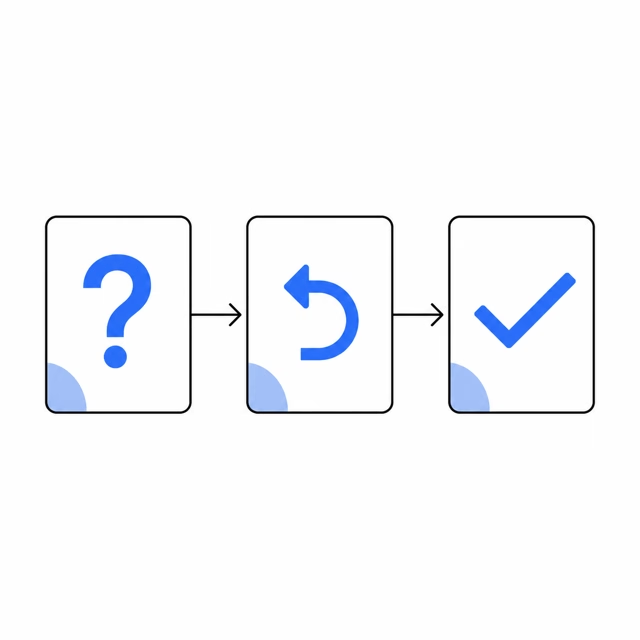
Choose the question, stakes, reversals, open loops, and ending.
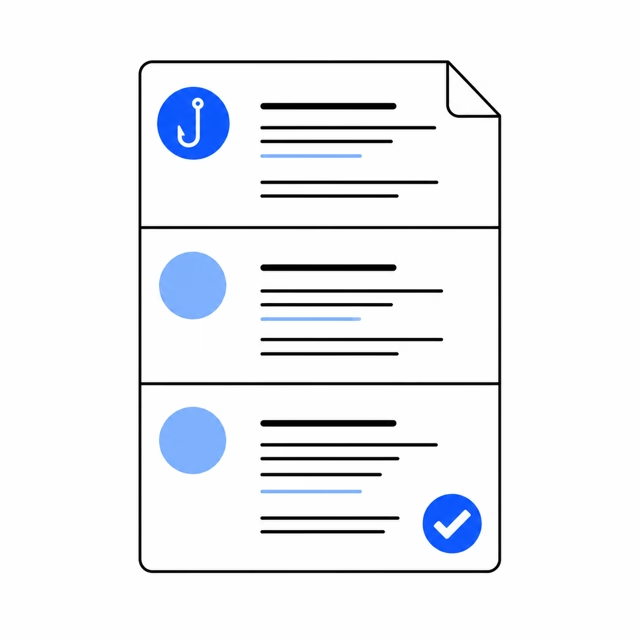
Write source-backed narration for the target runtime and channel voice.
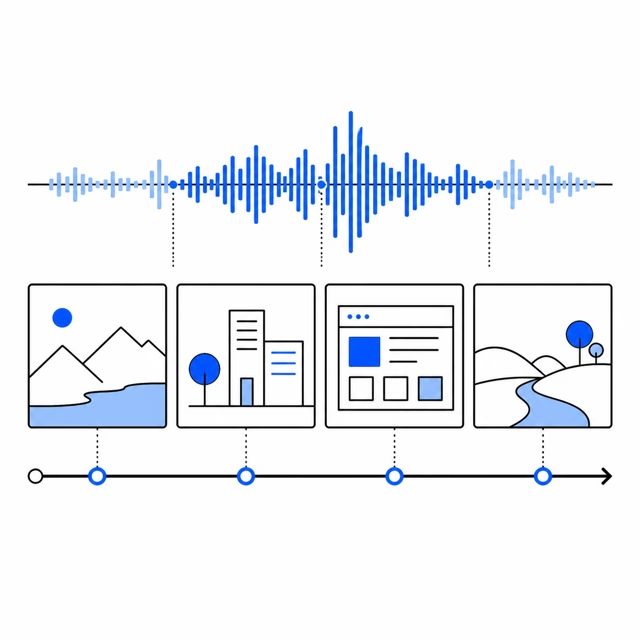

Generate narration, plan each shot, and keep timing tied to every sentence.
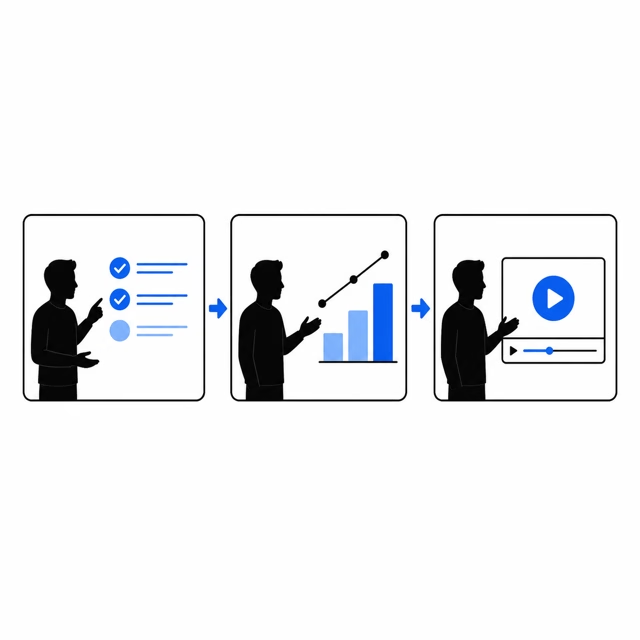


Generate consistent stills and use short AI video where motion adds something.
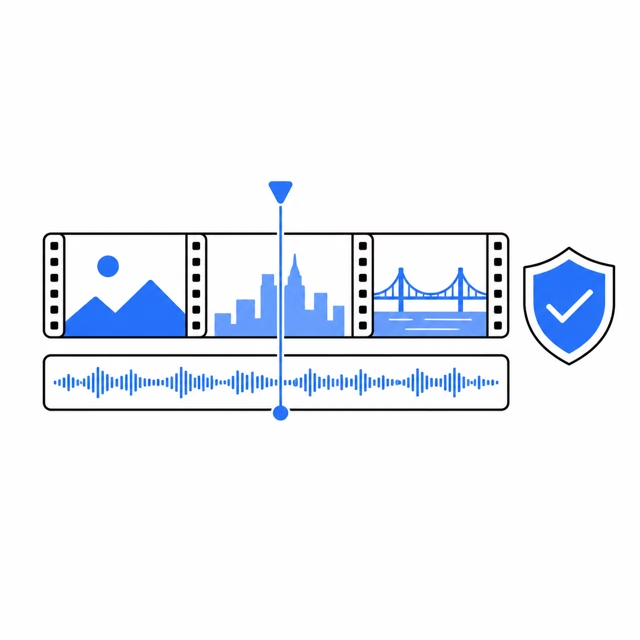
Preview the cut, replace one weak shot, render remotely, and run final checks.
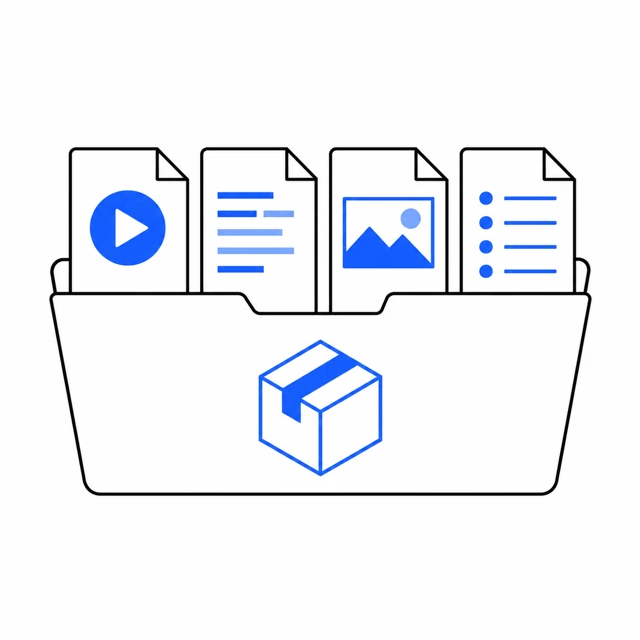
Export the video, captions, sources, titles, description, chapters, tags, and thumbnail options.

Connect the channel, schedule the release, and publish from the same project.
Coming soon Claude CodeOrchestrationThe agent work you would otherwise set up and run yourself.GeminiImagesImage generation without a separate Google AI account or key.OpenAIImagesImage generation, including batch jobs when the model supports them.ElevenLabsVoiceNarration, timestamps, and voice timing handled inside the project.
 FLUXBlack Forest LabsFLUX image models are available from the same image step.
 SeedreamByteDanceSeedream image models without another account or balance.
 QwenAlibabaQwen image and video models can run inside the same pipeline.
 KreaImagesKrea image models are available as another model choice.
 RecraftImagesRecraft image generation without moving prompts between tools.
 Microsoft AIImagesMicrosoft image models can be added to the same project flow.
 xAIImagesGrok image models without a separate provider setup.
 SourcefulImagesRiverflow image models are available from the same image step.
Why long-form
“Shorts are an editing game. Long-form is a research, narration, and story game. Those are the parts we built this product to automate well.”
100K views ≈ $1–$7
Swipe feed100K views ≈ $200–$1,200
Broad topic or weaker buyer fit100K views ≈ $2,000–$3,000
Strong topic, buyer audience, longer video| Revenue source | Long-form | Shorts |
|---|---|---|
| YouTube ads | $2,000–$3,000At $20–$30 RPM | $1–$7At $0.01–$0.07 RPM |
| In-video sponsor | +$1,500–$5,000A natural 30–90 second integration | $0 from a sponsor segmentA Short is too short for a normal sponsor segment. |
| Affiliate or product sales | +$500–$10,000+Wide range. It depends on the offer and audience. | $0 in most casesShorts description URLs are not clickable. |
| Simple 100K-view example | $4,000–$18,000+Ads, one sponsor, and affiliate sales. | $1–$7YouTube ads only. |
Shorts need tight, fast editing. Each one can still take real human time to make well.
Long-form can win on the script. Good research, narration, and useful information can carry simpler editing.
Better buyer fit. Long-form viewers choose to spend time on one topic. That gives a relevant sponsor or affiliate offer more room to work.
More ways to earn. Videos over 8 minutes can use mid-rolls. Long-form descriptions can hold clickable links. Shorts description URLs cannot.
Example math, not a promise. Topic, audience, retention, season, and offer fit change the result. Sources: base RPM ranges · $29.30 long-form RPM · sponsor math · creator income breakdown · mid-roll ads · clickable links · what RPM means
One prompt. One complete run.
Give it the topic and the direction. Research, script, voice, scenes, edit, and render run in order.
Make a video about how China is catching up in the AI race.
What YouTube actually says
YouTube looks at whether a channel feels mass-produced, repetitive, or interchangeable. The tool is not the problem. The finished video still needs a real story, useful value, and clear creative decisions.
YouTube Creator Insider · Official policy explanation
Coming soon
Choose a schedule once this launches, and the agent will prepare each project as one pipeline: research, writing, generation, editing, rendering, and the upload package. Automatic YouTube upload and publishing will follow separately.
Pricing
$49 a month unlocks the complete workflow. During beta, every paid month also includes $30 to spend on production.
Research, writing, voice, visuals, editing, rendering, storage, and orchestration.
We call and manage the providers. Their usage is passed through without markup.
100 medium GPT Image 2 images via Batch, Max narration, research, writing, and rendering.
Batch cuts eligible image cost by 50%.Our beta estimate plans for up to 3 hours; provider window up to 24 hours.
Production Balance stays in dollars, and provider usage has no hidden markup. Start with the included beta balance and top up only when you need more.
No. YouTube makes that decision. Longform Studio is built around the things YouTube says it wants to see: original work, clear educational or entertainment value, real variation between videos, and meaningful editing. No tool can promise approval, reach, or revenue.
Runtime, narration length, shot count, image quality, AI video use, and rendering all change the cost. Each paid step shows the provider, model, expected wait, and dollar estimate before it runs. The ledger then settles the actual provider cost.
Yes. Start with a rough prompt and approve the route. The agent can research, outline, write, plan scenes, generate media, build the edit, render, and package the result. You can also stop at any step and change the work yourself.
Yes, where motion helps. A short abstract animation, map movement, process view, or transition can route to an AI video model. Most documentary beats can stay as controlled stills when that is cheaper and easier to keep consistent.
No. You do not need to set up Claude Code, Gemini, OpenAI, ElevenLabs, OpenRouter, storage, queues, or rendering. Longform Studio handles those services and still records the route and cost beside the project.
Yes. Edit the shot prompt, choose a different route, regenerate that asset, or upload your own replacement. Approved scenes stay in place.
Automatic YouTube upload and scheduling are coming soon. Until then, every project ends with a complete upload package, including the master video, captions, titles, description, chapters, tags, sources, and thumbnail options.
Built for long-form YouTubeResearch, script, voice, visuals, edit, render, and upload package in one project.