
Is YouTube Automation Legit? Separating the Business From the Scam
Is YouTube automation legit or a scam? The upload model is real and allowed by YouTube. The courses selling it are where the scams live. Here's how to tell them apart.
In November 2022 the FTC sued a company called DK Automation for promising people they could "generate passive income on autopilot" by buying a done-for-you online business package. By March 2024 the agency had sent back $2.8 million in refunds. The business model DK Automation was selling wasn't YouTube automation specifically — it was Amazon and Walmart storefronts — but the pitch is identical to what's sold under the YouTube automation label today, and that's the confusion this article exists to clear up.
Is YouTube automation legit? Yes — as a business model, it's exactly what it sounds like: a channel where one person doesn't perform on camera but still writes, researches, or directs every video, using freelancers or AI tools for narration, visuals, and editing. YouTube has no policy against that. What's not legit, routinely, is the ecosystem selling access to it — the $2,000 masterclasses, the "done-for-you channel" packages, the screenshots of a single good month presented as the typical outcome. Those two things get merged into one keyword search, and it's worth pulling them apart before you spend money on either.
LEGIT: The Business Model
The upload model itself
- No requirement to appear on camera or use your real name
- Outsourced research, narration, visuals, and editing are all allowed
- Same monetization bar as any other channel — 1,000 subs, 4,000 watch hours
- Condition is originality, not who or what made the video
Best for: Anyone willing to put in 12–24 months of real research, scripting, and editing decisions.
SCAM TERRITORY: The Ecosystem
The courses and coaches selling access to it
- Guaranteed "passive income on autopilot" claims
- Screenshots of one video's earnings sold as the typical result
- Fake YouTube Studio dashboards used as course-sales proof
- Refund policies that turn out to be unenforceable
Best for: No one. Two or more of these signals and you walk away.
Key Takeaways
- YouTube automation the business model is fully allowed — the platform's only requirement is originality, not who (or what) makes the video.
- The FTC has already fined one "done-for-you" business-opportunity seller $2.8 million in consumer refunds for the exact "passive income on autopilot" pitch used to sell automation courses.
- Creator vixios traced guru "proof" screenshots to a Telegram group selling fake YouTube Studio dashboard mockups — the channels behind the growth curves never existed.
- Realistic earnings cluster at $1,000–$10,000 a month, and only after 12–24 months of consistent uploads — not the 30-day timeline most courses sell.
- Eight red flags separate a legitimate course from a funnel. Two or more on this list means walk away.
Is YouTube automation legit as a business model? Yes, with conditions
YouTube doesn't require creators to appear on camera, use their real name, or produce content by hand. Compilation channels, documentary channels, explainer channels, and narrated-story channels have existed on the platform since before "faceless YouTube" was a marketing term. The mechanics of automation — outsourcing script research, hiring a voice actor or using AI narration, using stock or AI-generated visuals, paying an editor — are all allowed, provided the finished video is a genuine piece of content and not a copy of someone else's work.
The condition is originality, not authorship. YouTube's monetization policy explicitly permits commentary, reaction content, and edited compilations as long as they add "substantive modifications" — your own narration, structure, analysis, or editing choices — rather than reposting someone else's video with minimal changes. A channel run by a team of five people who never appear on screen, covering history or true crime or finance, is treated the same as a channel run by one person with a webcam, as long as both pass the same bar for original value.
Where automation channels get in trouble isn't the outsourcing. It's cutting corners on that originality bar to publish faster, which is a production decision, not a structural flaw in the "automation" idea itself.
Where the scams actually live: the ecosystem, not the format
Nobody has ever been fined for running a faceless YouTube channel. People have been fined — repeatedly, by the FTC — for selling access to one. The DK Automation case is the clearest example: the FTC's complaint centered on claims of guaranteed passive income and "done-for-you" packages that, per the agency, rarely delivered for buyers. The FTC has pursued a string of similar "done-for-you" business-opportunity cases beyond that one, including a separate action over an "AI-powered Ecommerce Empire" training program priced near $2,000, and another that took more than $12 million from consumers before being shut down by court order.
FTC enforcement against 'done-for-you' business scams
$2.8M
Refunded to consumers after the FTC's DK Automation case
$12M+
Taken from consumers before a separate done-for-you scheme was court-ordered shut
$2,000
Price of the FTC-scrutinized "AI-powered Ecommerce Empire" training program
None of those specific cases were about YouTube channels. But the sales pattern is the one that shows up constantly when you search "youtube automation" — and Reddit's automation communities describe the same pattern from the buyer side: delayed course access, refund policies that turn out to be unenforceable, aggressive upsells once you're already in, and "done-for-you" channel-building services that under-deliver against what was promised on the sales page.
Independent creator vixios tested this directly instead of taking the guru's word for it: they bought a YouTube automation course marketed at $600 (discounted to $30) and traced the "proof" behind it — the screenshots of huge earnings that gurus flash to sell the course in the first place.
What they found wasn't a legitimate analytics screen at all. The "YouTube Studio" dashboards shown off in dozens of these promo videos — the ones with the suspiciously smooth growth curves — traced back to a Telegram group selling access to fake dashboard mockups for YouTube Studio, Shopify, and Fanview, built specifically so gurus could screen-record a "channel" that doesn't exist.
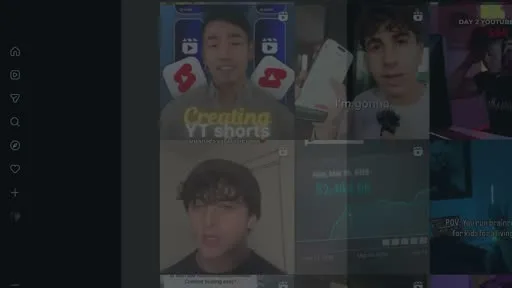
The tell isn't the format being sold. It's the promise attached to it — "passive," "autopilot," "even if you've never made a video before" — layered onto a business that, done properly, still requires research, editing judgment, and months of iteration before it earns anything.
The red-flag checklist
Before paying for a course, coaching program, or "done-for-you" channel service, run it against this list. Any one item is a caution. Two or more, walk away.
| Red flag | Why it matters |
|---|---|
| "Passive income" or "autopilot" in the pitch | Every legitimate automation channel still requires ongoing editorial decisions — topic selection, script review, thumbnail testing. Nothing about it runs itself. |
| Screenshots of one video's earnings, not a channel's history | A single viral hit says nothing about repeatable RPM or the 12–24 months most channels take to find an audience. |
| No refund policy, or one gated behind conditions you can't meet | The FTC's DK Automation complaint specifically cited unenforceable or non-existent refunds as part of the deception. |
| Guru income claims with no channel link you can verify | If they won't show you the actual YouTube channel behind the number, the number is unverifiable by design. |
| Upsells that appear only after you've paid the entry fee | A recurring pattern in course-scam reporting: the $97 front-end product exists to get you into a funnel for $2,000+ coaching. |
| "Done-for-you" channel packages sold for a flat fee | You're paying someone to build an asset you then have to grow yourself — with no way to verify it wasn't already flagged or built on templated content before you bought it. |
| Pressure to enroll before a countdown timer expires | Scarcity mechanics on an educational product are a sales tactic, not a reflection of limited spots. |
| No mention of YouTube's monetization policies at all | A course that doesn't explain what gets a channel demonetized is setting you up to learn it the hard way, on your own channel. |
What YouTube will actually demonetize you for
This is the part most courses skip, because it's less exciting than the income claims: YouTube tightened its rules on templated and repetitive content, and as of July 2025 renamed the relevant policy from "repetitious content" to "inauthentic content" to widen its scope. The current guidance restricts monetization for channels built on image slideshows, templated storylines, or scrolling text with minimal or no narrative, commentary, or educational value — and it specifically calls out AI-generated content made with generic, unoriginal templates. Separately, YouTube's reused content policy prohibits monetizing content "downloaded or copied from another online source without any substantive modifications."
Neither policy bans AI tools or outsourced production. Both target the output, not the workflow. A channel that uses AI narration and AI-generated images but writes original scripts, structures its own arguments, and edits with intent is on the right side of both policies. A channel that strings together a templated script format over stock footage with nothing distinguishing one video from the next is the exact profile YouTube says it's now enforcing against.
The enforcement path is three strikes, not a surprise ban
Inauthentic or reused content moves through warning, then a 90-day suspension, then permanent removal from the Partner Program. To monetize at all you need 1,000 subscribers and 4,000 watch hours in the trailing 12 months (or 1,000 subscribers and 10 million Shorts views in 90 days for the Shorts path), an active AdSense account, and a clean strikes record — full detail on YouTube's Partner Program page. None of that is automation-specific. It's the same bar every channel clears.Realistic numbers, not guru numbers
Reddit's automation communities and independent creator write-ups converge on a similar shape: most new channels earn nothing for the first several months, a working channel in a competitive niche can realistically reach $1,000–$10,000 a month, and that range typically arrives after 12–24 months of consistent uploads — not the "30 days to profit" timeline sold in a lot of course marketing. One documented case, an aviation-niche channel, generated roughly $10,000 off 2.3 million views over about a year; that's a genuine result, and it's also one channel in one niche, not a template that transfers.
RPM (revenue per thousand views) swings enormously by niche and audience geography — finance and business content typically earns several times what entertainment or story content earns per view — which is why any course promising a fixed monthly number regardless of niche is making a claim it can't actually back.
What actually determines whether your channel works
The variable that separates channels that grow from channels that stall isn't whether the production is outsourced. It's whether every video clears the bar of being worth someone's ten minutes — researched, structured, narrated with intent, visually consistent enough that viewers recognize the channel. That's a production-quality problem, and it's the one place where tooling actually matters, distinct from the marketing-claims problem covered above.
Most people trying to run this covers the gap by duct-taping ChatGPT for scripts, a separate voice tool, a separate image generator, and a video editor together — which is slow, and makes it expensive to fix one bad scene without re-touching the whole video. Longform Studio was built for the long-form (8–30 minute) side of this specifically: source-backed research, sentence-level script editing, consistent AI visuals across a video, ElevenLabs narration with real timing, and the ability to regenerate a single scene instead of the whole project when one part isn't working. It doesn't promise a subscriber count or a revenue number — no honest tool can — it just removes the production friction that makes originality expensive to maintain at upload volume.
If you're deciding whether to start, read what YouTube automation actually is and whether faceless channels make money before you evaluate any paid course against them — you'll be able to tell in about five minutes whether the course is teaching you something beyond what's already public. When you're ready to build, our guide to starting YouTube automation walks through it without a course fee, and Longform Studio is there for the production side once you are.
FAQ
Is YouTube automation against YouTube's terms of service?
No. YouTube has no rule against outsourcing script writing, narration, editing, or visuals, and no requirement to appear on camera. The requirement is that the finished video adds original value — commentary, structure, storytelling, or analysis — rather than reusing someone else's content or following a generic, interchangeable template.
Why does YouTube automation have such a bad reputation on Reddit?
Mostly because of the courses and "done-for-you" services sold under that name, not the format itself. Reddit threads document delayed course access, unenforceable refund policies, and aggressive upsells — the same pattern the FTC cited when it fined DK Automation $2.8 million in refunds for similar "passive income on autopilot" claims in an unrelated done-for-you business scheme.
Can I really make money with a faceless YouTube channel?
Yes, but slowly and not passively. Realistic outcomes reported by creators cluster around $1,000–$10,000 a month after 12–24 months of consistent uploads, once a channel clears the 1,000-subscriber, 4,000-watch-hour threshold for the Partner Program. Channels promising results in 30 days are describing an exception, not a typical timeline.
What's the difference between YouTube automation and a scam?
YouTube automation is a production model — outsourced or AI-assisted content creation, still directed by a real person with editorial judgment. A scam is the sales layer wrapped around that model: guaranteed income claims, autopilot language, unverifiable earnings screenshots, and refund policies that don't hold up. You can adopt the format without buying into any of the scam signals.
Will using AI tools for my videos get my channel demonetized?
Not by itself. YouTube's inauthentic content policy targets templated, repetitive output — AI or not — that lacks narrative, commentary, or educational value. AI-assisted channels that produce original scripts and distinct visuals per video are treated the same as any other channel; the policy is about the finished product, not the tools used to make it.
Skip the $2,000 course. Build the channel.
This article exists because the format works and the courses selling it usually don't. Longform Studio is the production tool, not a guru masterclass — research, script, voice, and consistent visuals for one video at a time, priced per minute rendered.
Try Longform StudioNo income promises. No autopilot claims. Just the production pipeline.