
Long-Form vs Short-Form Content: Which Wins on YouTube?
Long form vs short form content compared on RPM, watch time, and algorithm shelf-life — with real 2026 figures, not vibes. Here's who actually wins.
Key Takeaways
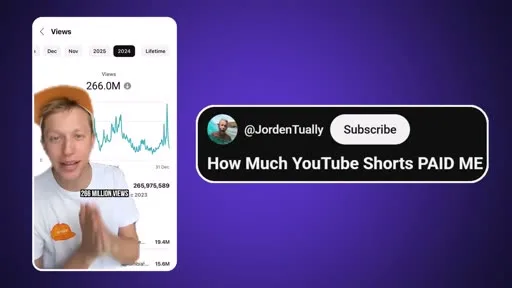
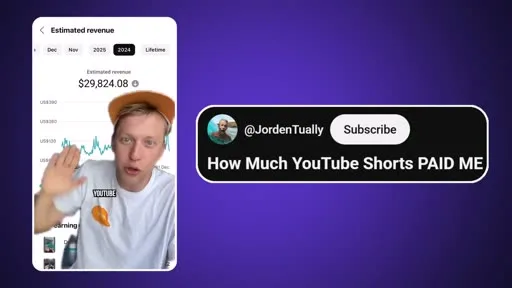
- Shorts RPM runs $0.01–$0.08 per 1,000 views versus $1–$16+ for long-form — a real creator’s 266 million Shorts views in 2024 cleared just $29,824 at an effective $0.11 RPM.
- Long-form banks 10–20x more watch time per view than a Short’s ~60-second ceiling — the same metric that unlocks the 4,000-hour Partner Program threshold.
- Five of six head-to-head dimensions go to long-form outright; the sixth, algorithm shelf-life, is a genuine split rather than a Shorts win.
- Long-form compounds in search for years. A back catalog of Shorts mostly stops earning the moment the feed moves on.
- Even vidIQ’s own read on the numbers: Shorts are “just the top of the funnel” — the real money comes from what a long-form catalog builds around them.
A Shorts creator with 400,000 monthly views and a mid-tier niche will clear somewhere around $20. A long-form creator in the same niche, same views, clears somewhere between $800 and $6,000. That gap isn’t a rounding error or a bad month — it’s structural, it’s published in YouTube’s own help documentation, and it’s the reason the “just make more Shorts” advice keeps producing channels that never turn into a business.
This is the long form vs short form content question stripped of opinion: six dimensions, real numbers for each, a winner declared per dimension, and a verdict at the end. Short-form vs long-form content isn’t a personality question. It’s math, and the math points one direction for anyone trying to build a channel that still pays in three years.
One Shorts creator's actual 2024 YouTube Studio dashboard
266M
Views in 2024, almost all Shorts
$29,824
Total ad revenue for the year
$0.11
Effective RPM per 1,000 views
$1–$16+
Typical long-form RPM, same niches
Sources: vidIQ — How Much YouTube ACTUALLY Pays for Shorts in 2026?
RPM and monetization: not close
Start with the number that actually lands in a bank account. RPM (revenue per thousand views, after YouTube’s cut and CPM losses) is where the format gap is starkest.
YouTube pays these two formats through entirely different mechanisms, and it says so directly. For long-form video, YouTube’s partner earnings overview states the company “will pay them 55% of net revenues from ads displayed or streamed on their public videos on their content Watch Page.” Each video earns its own ad revenue, tied to its own watch time.
Shorts don’t work that way. Per YouTube’s Shorts monetization policies, all Shorts Feed ad revenue across every monetizing creator gets pooled monthly, then divided by each creator’s share of total engaged views — and creators keep 45% of their pool allocation, ten points lower than the long-form share. If a Short uses one licensed music track, half of that Short’s contribution to the pool goes to music licensing before creators see a cut; two tracks and it’s two-thirds.
The real-world RPM gap this produces is large. Industry RPM data from Lenos puts long-form RPM at roughly $1.10–$16.50 depending on niche — finance runs $4.95–$16.50, education $2.75–$6.88, gaming at the low end around $0.88–$3.30. Shorts RPM across the same data sits between $0.01 and $0.08, regardless of niche, because the pooled system flattens niche premiums that long-form ad auctions reward directly.
That gap isn’t theoretical — it shows up on an actual creator’s own dashboard. vidIQ, the ~2.4M-subscriber creator-education channel, broke down a Shorts creator’s real 2024 numbers in How Much YouTube ACTUALLY Pays for Shorts in 2026?. The creator, @JordenTually, shows their YouTube Studio screen on camera: 266 million views in 2024, almost all Shorts, for $29,824.08 in total ad revenue. vidIQ runs the math live: “if we put all of these engaged views through the RPM meat grinder, that is a return of 11 cents per 1,000 views” — a quarter of a billion views clearing less than half of one US average salary.
vidIQ pulls this straight from the creator’s own YouTube Studio, not an estimate — the two screens below are frames from inside that video.
Winner: Long-form — not by a margin, but by an order of magnitude, often two.
Watch-time accumulation
YouTube’s recommendation system runs on total watch time, and here the two formats aren’t even measuring the same currency. A Short caps out around 60 seconds of possible watch time per view. A 20-minute long-form video can bank 15–20 minutes of watch time from a single engaged viewer — 15 to 20 times the ceiling, from one person, one click.
This compounds at the channel level. Total watch-time hours are also the metric behind the 4,000-hour Partner Program threshold and behind how much weight YouTube’s suggested-video and search algorithms give your channel over time. A channel built on Shorts can hit view counts fast without ever accumulating the deep watch-time signal that makes YouTube trust a channel enough to distribute it broadly outside the Shorts feed.
Winner: Long-form
Audience relationship
A Shorts viewer scrolls past a video in under a minute, often without registering the channel name. A long-form viewer sits with a creator’s voice, pacing, and point of view for 10, 20, 30 minutes — enough time to form an actual opinion about whether they trust this person. That’s the difference between a view and a relationship, and it shows up in subscriber behavior: Shorts-driven subscribers churn hard, because the format never gave them a reason to remember who made the video.
Long-form is also where a channel earns a “point of view” — a phrase worth taking literally. A 60-second clip can deliver a fact. A 20-minute video can build an argument, walk through evidence, and leave the viewer changed. That’s what makes someone come back next week.
Winner: Long-form
Algorithm shelf-life
This is the one dimension where Shorts genuinely wins, and it’s worth being honest about why. Shorts live in a feed — an infinite, disposable scroll where each video gets a burst of attention and then is gone. A Short’s discovery window is measured in days.
Long-form video lives in search and suggested — surfaces with memory. A well-tagged long-form video with a specific title can pull steady search traffic two years after it was published, the same way a blog post ranks on Google long after it was written. This is the actual, durable advantage of long-form: it compounds. A back catalog of 100 long-form videos keeps earning views from search in year three. A back catalog of 500 Shorts from the same period is mostly earning nothing, because the feed already moved on.
Winner: Split — Shorts wins fast discovery, long-form wins durability. For a channel meant to still exist in two years, durability is the one that matters.
Sponsorship value
Sponsors buy attention and trust, and both scale with format length. A 60-second Short gives a sponsor maybe 5–10 seconds of usable read before the viewer swipes away, and the CPM sponsors will pay for that read reflects it — Shorts integrations are usually priced as a fraction of a long-form mid-roll, when brands will pay for them at all. A 20-minute video can carry a genuine 60–90 second integration, explained with context, inside content the viewer chose to sit through. Sponsors price that dramatically higher, because it’s demonstrably more persuasive — the viewer already extended trust just by staying.
Winner: Long-form — and it isn’t close once you compare actual sponsor rate cards.
Effort-per-dollar
Here’s the tradeoff Shorts advocates lean on: a Short takes an hour to make, a long-form video can take a full day of research, scripting, visuals, and editing. On raw hours-per-video, Shorts look efficient.
But effort-per-dollar isn’t hours-per-video — it’s the RPM math from the top of this article applied to the hours actually spent. At $0.01–$0.08 RPM, a Short needs roughly a million views just to clear $10–$80. At $2–$16 RPM, a 20-minute video needs a fraction of the views to clear the same number, and unlike the Short, it keeps earning from search for years instead of days. Once you divide dollars by hours invested rather than by hours-per-upload, long-form wins even on efficiency — it just wins on a longer clock.
Winner: Long-form — once you measure the right denominator.
The scorecard
| Dimension | Shorts | Long-form | Winner |
|---|---|---|---|
| RPM / monetization | $0.01–$0.08 | $1–$16+ (niche-dependent) | Long-form |
| Watch-time accumulation | Capped near 60s/view | 10–20+ min/view | Long-form |
| Audience relationship | Low, high churn | High, durable | Long-form |
| Algorithm shelf-life | Fast, feed-based, days | Slow-building, search-based, years | Split |
| Sponsorship value | Low CPM, brief reads | High CPM, full integrations | Long-form |
| Effort-per-dollar | Efficient per-upload, poor per-dollar | Slower per-upload, better per-dollar over time | Long-form |
Five of six categories go to long-form outright, and the sixth is a genuine split rather than a Shorts win. That’s not a coin flip dressed up as analysis — it’s what the numbers say when you actually pull them.
The verdict: Shorts are a tactic, long-form is the asset
Shorts are good at exactly one thing: getting a new face in front of people who’ve never heard of your channel. That’s a discovery tactic, and it’s a legitimate one — plenty of successful long-form channels use Shorts as a funnel, clipping a moment from a long video to pull new viewers back to the source.
vidIQ lands on the same split this article does: after walking through the $0.11 RPM, the video’s conclusion is that “the ad revenue is just the beginning” and Shorts are “just the top of the funnel” — the real money for Shorts-heavy creators comes from memberships, brand deals, and audiences pulled toward higher-value formats, not from Shorts ad revenue itself. That’s a creator-education channel with 2.4M subscribers making the long-form-is-the-asset case from the numbers, not from vibes.
The ad revenue is just the beginning — Shorts are just the top of the funnel.
— vidIQ, How Much YouTube ACTUALLY Pays for Shorts in 2026?
But a Shorts library isn’t an asset in the way a long-form catalog is. It doesn’t compound in search, it doesn’t build a relationship deep enough to sustain sponsorships, and it pays at a fraction of long-form’s rate even when it works. A channel of 300 long-form videos is worth something years later — steady search traffic, a real audience, real sponsor interest. A channel of 3,000 Shorts, absent a long-form catalog behind them, mostly isn’t. That’s the actual answer to long form vs short form content: they’re not competing formats, they’re different jobs, and only one of them builds something that’s still standing in three years.
That’s also the reason Longform Studio exists as a dedicated long-form production environment rather than another all-formats video tool: research, scripting, visuals, narration, and rendering built around 8–30 minute videos specifically, because that’s the format that turns into an asset. If you’re evaluating what a long-form video actually is before committing to it, our breakdown of what counts as long-form on YouTube is the place to start, and our production walkthrough covers the actual steps once you decide to build one.
The bottom line
Five of six dimensions go to long-form, and the sixth is a split, not a Shorts win. Use Shorts as a funnel if you have the capacity for it — but build the channel on long-form, because that’s the format that’s still earning in three years.FAQ
Is short-form or long-form content better for monetization?
Long-form, by a wide margin. YouTube pays long-form creators 55% of ad revenue tied directly to their own videos, while Shorts creators get 45% of a pooled fund split across all monetizing creators. In practice that produces long-form RPMs of roughly $1–$16+ depending on niche versus $0.01–$0.08 for Shorts.
Should a new channel start with Shorts or long-form?
Start with long-form as the core product, and use Shorts only as a clipping funnel back to it if you have the capacity. A channel built entirely on Shorts accumulates views without accumulating the watch-time, search presence, or audience trust that make a channel valuable later.
What are the real benefits of long-form content over Shorts?
The core benefits are durability and depth: long-form videos keep earning search traffic for years instead of days, build enough viewer trust to support real sponsorships, and pay at a meaningfully higher RPM. Shorts are faster to make but produce a library that mostly stops earning once the feed moves on.
Do Shorts help long-form channels grow?
Yes, when used as a funnel — a clip from a long-form video posted as a Short can introduce new viewers who then click through to the full video and subscribe. The mistake is treating Shorts as the whole strategy instead of a discovery layer on top of a long-form catalog.
How much does YouTube actually pay per view for long-form vs Shorts?
Long-form RPM (revenue per 1,000 views) typically runs $1–$5 for general content and up to $16+ for high-value niches like finance, per industry RPM data. Shorts RPM runs $0.01–$0.08 regardless of niche, because Shorts revenue is split from a pooled fund rather than tied to an individual video's ad performance.
Long-form is the asset. Start compounding it.
This article walked through why five of six dimensions go to long-form, from RPM to sponsorship value to durability in search. Longform Studio is a production environment built specifically for the 8–30 minute videos that turn into that kind of asset.
Start with Longform StudioResearch, script, visuals, narration, and render — built around the format that compounds.