
What Is a Faceless YouTube Channel? (And Why They Work)
What is a faceless YouTube channel? A definitional guide covering the meaning, YouTube's actual policy, monetization rules, and real channels doing 20M+ subs.
Definition
A faceless YouTube channel is a channel where the creator never appears on camera — the video runs on narration, stock or AI-generated visuals, screen recordings, animation, or archival footage instead of a talking head. That's the whole definition. It has nothing to do with anonymity of the channel owner, and nothing to do with quality or legitimacy — Kurzgesagt has run faceless for over a decade at 25 million subscribers.Key Takeaways
- "Faceless" describes the video format, not the person. You can run a faceless channel under your own name and never hide your identity — plenty of faceless creators are publicly known.
- No YouTube policy requires a face on screen. The monetization review checks originality of the work, not visibility of the person making it.
- Faceless channels join the Partner Program under the same bar as every channel: 1,000 subscribers plus 4,000 watch hours in 12 months, or 10 million Shorts views in 90 days.
- Four channels alone make the scale case: Kurzgesagt (~25M subs), WatchMojo (~26M), Daily Dose of Internet (~20M), and Lofi Girl (~15M) — none built on a personality.
- The format has two honest costs — no parasocial moat, and higher exposure to copycats — worth knowing before you commit 40 videos to it.
The confusion around the term comes from people conflating three separate things: showing your face, using your real name, and being a "real" creator. You can run a faceless channel under your own name and post your face on Twitter while never appearing in a single video. The "faceless" label describes the video format, not the person behind it.
What "faceless YouTube channel" actually means
Practically, a faceless channel replaces the on-camera host with one or more of these:
- Voiceover narration over B-roll, stock footage, or AI-generated images
- Text-on-screen with music, no voice at all
- Screen recordings of software, games, or browsing
- 2D/motion graphics animation
- Archival or licensed footage, re-edited and narrated
The thread connecting all five is that none of them require a camera pointed at a human. That's a production choice, not a content-quality shortcut — a well-researched 20-minute documentary and a lazy AI slideshow are both technically "faceless," and YouTube's algorithm and audience tell them apart fast.
Is a faceless channel actually allowed on YouTube?
Yes. There is no YouTube policy that requires a creator's face to appear on screen, and no such requirement exists anywhere in YouTube's channel monetization policies. What the policy does require is originality: content must be, in YouTube's own language, "your original creation," not "mass-produced, generic, repetitive, or manipulative."
The line that actually trips channels up
It isn't about faces — it's this one: monetization is denied to "content that exclusively features readings of other materials you did not originally create, like text from websites or news feeds." That rule kills the channel that pastes a Wikipedia article into a text-to-speech tool and calls it a video. It does nothing to a channel that researches a topic, writes an original script, and narrates it over custom visuals. The bar is originality of the work, not visibility of the worker.Can a faceless channel actually monetize? Yes, with conditions
Faceless channels join the YouTube Partner Program (YPP) under the exact same thresholds as every other channel. Per YouTube's official eligibility page, you need one of two paths in the last 12 months:
| Path | Subscribers | Additional requirement |
|---|---|---|
| Long-form | 1,000 | 4,000 valid public watch hours in the last 12 months |
| Shorts | 1,000 | 10 million valid public Shorts views in the last 90 days |
Hitting the number gets you a review, not automatic approval — YouTube checks the channel against its content policies, including the originality rule above, before turning on ads. There's no separate, harder bar for channels without a face. The review is the same review every applicant gets.
Where faceless channels do face a real, non-policy obstacle: reused-content detection. A channel stitching together clips it didn't shoot, or running the same AI voice over generic stock footage that ten other channels also use, is more likely to get flagged in that review than a channel doing original scripting and original visuals — not because it's faceless, but because that pattern looks like the reused-content case the policy is written to catch. If you want the full path from zero to a monetizable channel — niche selection, upload cadence, the actual application steps — that's covered in how to start a faceless YouTube channel; this page stays on what the format is and whether it's viable, not how to execute it. The economics of what these channels actually earn per view are broken down separately in do faceless YouTube channels make money.
Why viewers don't care about faces in most niches
Faces earn trust in some formats and add nothing in others. The split is by content function, not by "faceless vs. not":
Where a face matters
Vlogs, reaction content, personal finance advice from an individual, anything selling the creator's own opinion as the product. The audience is there for the person.
Where a face is irrelevant
Documentaries, explainers, history recaps, ambient/study content, tech news roundups, compilation content. The audience is there for the information or the mood — most broadcast documentaries never show the narrator either.
This is why Kurzgesagt's animated explainers, Lofi Girl's ambient streams, and WatchMojo's list videos all cleared tens of millions of subscribers without a single host ever appearing. The format matched the content. A face would have added a variable the audience never asked for.
Real faceless channels and their scale
Four channels that make the definitional case better than any explanation — none of them run on a personality cult. They run on a consistent format, a specific niche, and enough volume to compound:
Faceless channels running at scale, no on-camera host, ever
~25M
Kurzgesagt — In a Nutshell, animated explainers
~26M
WatchMojo, narrated list/compilation videos
~20M
Daily Dose of Internet, curated clip narration
~15M
Lofi Girl, ambient music streams

That's a different growth mechanism than a personal brand channel, and it's worth being honest about what that mechanism gives up — covered below. First, the format at the top:
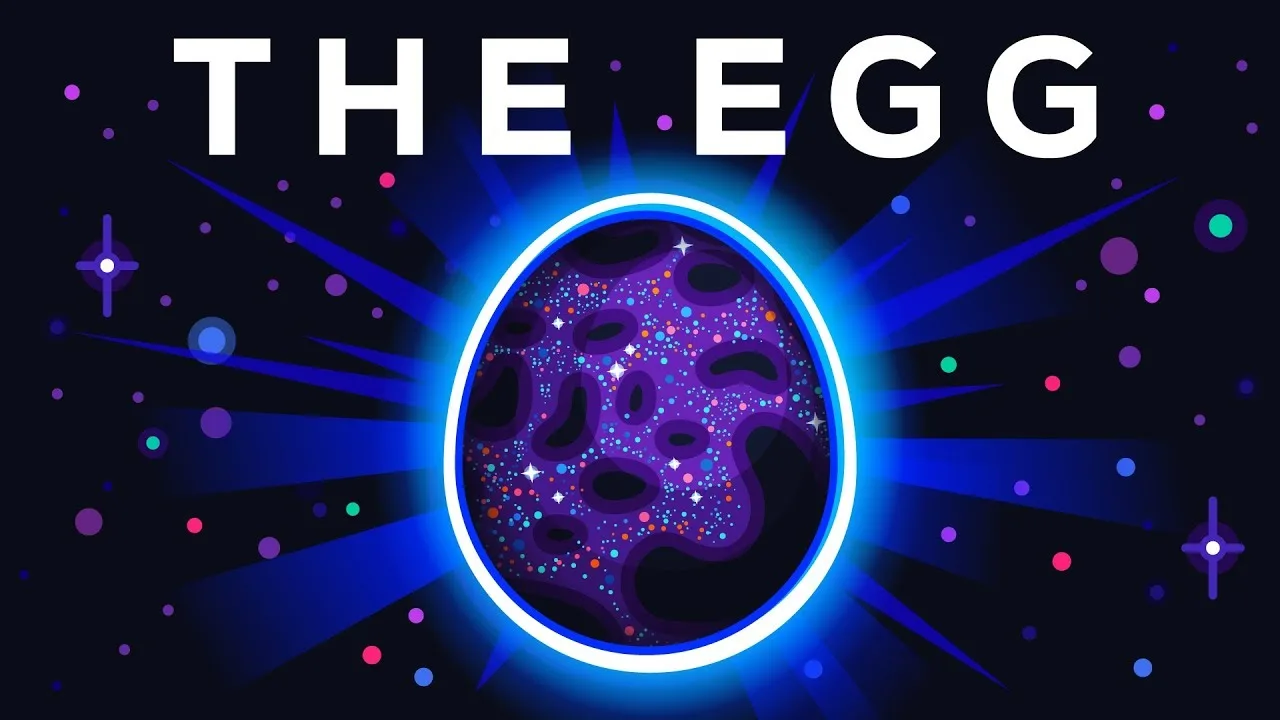
This is what the format looks like at the top. Kurzgesagt's "The Egg" — a narrated short story with over 36 million views, one of the most-watched uploads any faceless channel has ever put out — is worth watching directly rather than taking on faith:
The production tell is in the character design, not just the narration: Kurzgesagt draws its human figures as flat silhouettes with no facial features at all — dots and outlines standing in for a face, even inside the story. The channel that popularized faceless explainer video also draws faceless characters inside them. Nothing on screen is photographed; every frame is vector animation, so the entire eight-minute video is a scripted voiceover timed to motion graphics — exactly the "voiceover narration over 2D animation" production path above, running at a scale (36M+ views on a single upload) that shows the format has no ceiling built into it.
The honest disadvantages
Faceless isn't a free win. Two real costs come with it:
What you're trading away
No parasocial moat. A face-driven channel builds loyalty to a person — subscribers show up because they like the host, and that relationship is hard for a competitor to copy. A faceless channel builds loyalty to a format, and a format is copyable by definition. If your channel is "narrated true crime with AI stills," someone can launch the same channel next month with a different name.
More replaceable, both by competitors and by the platform's own recommendation shifts. Without a personal brand anchoring the audience, a faceless channel lives or dies more on whether the algorithm keeps surfacing it and whether the content stays differentiated enough not to blur into the dozens of similar channels in the same niche. The channels above survived that by being first, consistent, and genuinely well-produced for years — not by being faceless per se.
Neither of these is a reason to avoid the format. They're the trade you're making when you pick it, and knowing the trade up front beats discovering it after 40 videos.
Where this fits if you're building one
Producing a faceless channel well — original research, a real script, consistent visuals, narration that doesn't sound like a robot reading a Wikipedia page — is exactly the operational bar YouTube's policy is drawing around what counts as original. Longform Studio is built for that: source-backed research, sentence-level script editing, consistent-character AI visuals, ElevenLabs narration, and a full production record showing where every fact and image came from — the kind of provenance that answers "did a human actually make this" if anyone asks. It's built for long-form (8–30 minute) videos specifically, not Shorts. For a broader look at the format beyond this definition — costs, tools, and comparisons — see the complete faceless video guide.
FAQ
Is a faceless YouTube channel the same as YouTube automation?
No. "Faceless" describes a production choice — no on-camera host. "Automation" describes who does the work — a hands-off, often outsourced or fully automated pipeline. A faceless channel can be entirely hand-made by one person who just never appears on screen, or it can be automated; the two labels overlap often but aren't synonyms.
Do I need to hide my identity to run a faceless channel?
No. You can put your real name in the channel about page, credits, and business email while never showing your face in a video. Facelessness is about the video format, not anonymity — plenty of faceless creators are publicly known.
What niches work best for faceless channels?
Formats where information or mood carries the video work best: explainers, documentaries, history, true crime, tech news, ambient/study content, and compilation lists. Niches that depend on the creator's personal charisma — comedy vlogging, personal opinion content — are harder to run faceless because the audience showed up for a person.
Can a faceless channel get demonetized just for being faceless?
No — there's no policy penalty for not showing a face. Channels get demonetized for the same reasons any channel does: reused content without added value, policy violations, or failing the originality review. A well-produced faceless channel and a poorly produced one face very different odds, but the face itself isn't the variable YouTube checks.
How long does it take a faceless channel to hit monetization?
It depends on upload consistency and niche competitiveness, but the concrete target is 1,000 subscribers plus 4,000 watch hours in 12 months (or the Shorts equivalent). Channels publishing consistent, well-researched long-form videos on a defined schedule typically clear that faster than ones posting sporadically, since watch hours compound with both video length and upload frequency.
Make the faceless channel this definition describes, not the reused-content one
Originality is the whole bar YouTube checks — original research, an original script, visuals that aren't generic stock. Longform Studio is one workspace for that: source-backed research through synced ElevenLabs narration, built for long-form video specifically.
Try Longform StudioActual dollar costs shown per project. No opaque credit balance.