
How Often Should You Post on YouTube? (Data, Not Hustle)
How often to post on YouTube: what upload frequency actually does to growth, what the data supports, and a sustainable schedule.
Key Takeaways
- YouTube’s own creator team ran the actual numbers: across 40,000 upload breaks lasting 8 to 60 days, there was no consistent drop in views afterward — and a quarter of those channels came back with viewership up over 50%.
- How often to post on YouTube matters far less than what happens during each video. YouTube’s recommendation system ranks each upload on its own watch-time performance, not on your calendar.
- Realistic cadence depends entirely on format: roughly 1–2x/week for solo long-form, daily for Shorts, and every 2–4 weeks for deep-dive documentary work — and mixing those up is where schedules break.
- Burnout, not the algorithm, is what actually kills channels: 52% of creators report career burnout in a 2025 industry survey, and a documented daily-vlog streak nearly ended one of YouTube’s biggest creators’ marriage before he stopped.
Skip a week on YouTube and someone in the comments will tell you your channel is dead. Skip two, and the warnings get specific: the algorithm remembers, your subscribers forget you, the suggested feed drops you for good. How often to post on YouTube has become one of those questions where the folklore is louder than the evidence — so it’s worth asking what YouTube itself has actually measured, rather than what a thumbnail telling you to “post every day or die” assumes.
The short version: frequency is not the lever. Watch time, satisfaction, and whether your audience actually wants more of you this week are the levers, and YouTube has said so directly, with numbers, more than once.
What YouTube's own creator-research team found, on the record
40,000
Upload breaks analyzed, 8–60 days each
0
Consistent correlation between break length and view drops
25%
Of those channels grew viewership 50%+ after returning
52%
Of creators report career burnout, 2025 industry survey
Sources: Creator Insider — Upload Frequency, Channel Breaks & MORE · Billion Dollar Boy, 2025 creator burnout report
The break-penalty myth
Creator Insider is the informal channel YouTube’s own creator-technical team runs to answer exactly this kind of question in public. In one episode, a member of YouTube’s analytics team addressed the “can I take a break” question directly, and she came with data rather than reassurance: her team had pulled 40,000 upload breaks ranging from 8 to 60 days, more than half of them over two weeks long, and checked what happened to viewership afterward. There was no consistent drop. The range of outcomes was wide in both directions, and a quarter of the channels that took a break returned with viewership more than 50% higher than before they left. If anything, the data skewed toward longer breaks correlating with a more positive bounce, not a worse one — plausibly because creators who step away come back with a project they actually want to make.
The same episode addressed the companion question — should uploads be spaced evenly, or bunched together — and the answer undercuts the idea of a single correct frequency at all. Some audiences binge a whole series in one sitting; others need days between uploads so new videos aren’t competing with each other for the same attention. YouTube’s own guidance is to test it and watch average views per viewer in Analytics: if that number starts falling as you upload more, you’ve exceeded what your specific audience wants from you, and no universal upload-frequency rule was ever going to tell you where that line sits for your channel. What that cadence costs you per video is a production question — the honest hour math is in how to make a long-form video on YouTube.
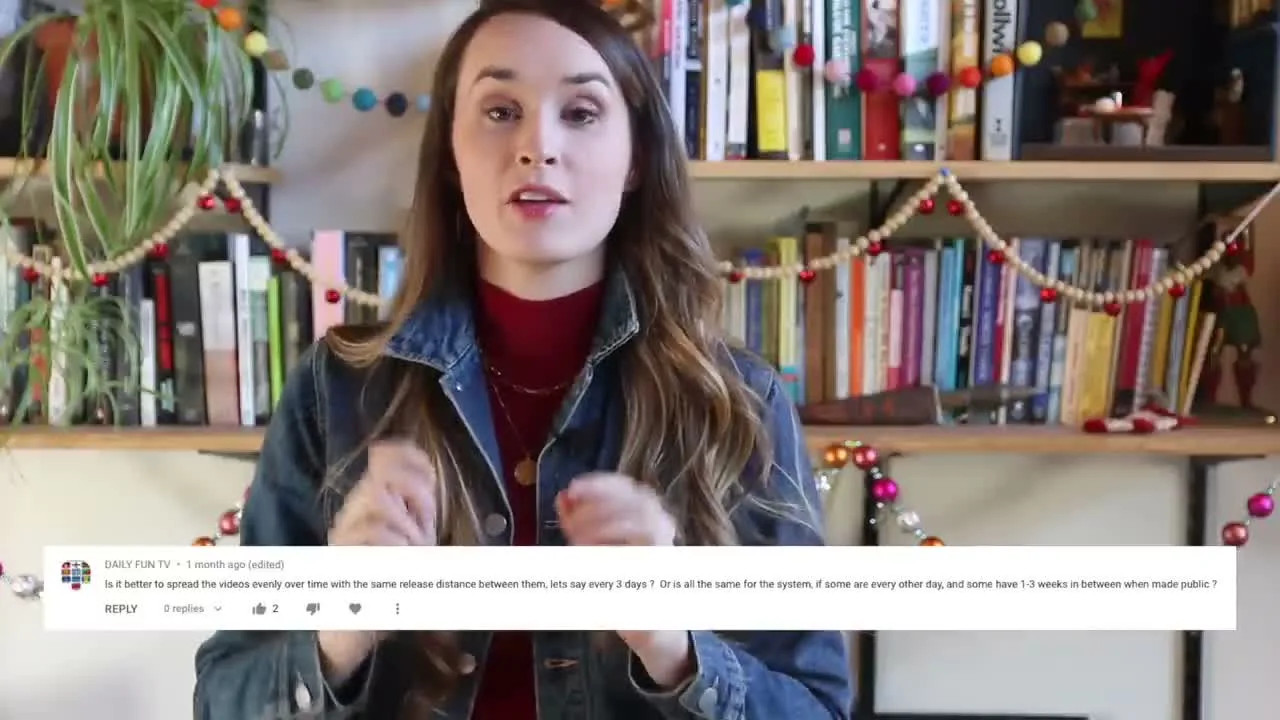
YouTube’s own upload schedule guidance for creators frames the whole decision around sustainability rather than a target number — asking creators how often they can realistically upload over the long term, not how often the top channel in their niche happens to post.
Myth
Miss a week and the algorithm quietly punishes you — fewer impressions, a colder suggested feed, a channel that never fully recovers.Reality
YouTube checked this against 40,000 real breaks and found no consistent penalty. Each video is still evaluated on how well it holds its own audience, break or no break.What upload frequency actually affects
None of this means YouTube posting frequency is irrelevant — it means its effect is indirect. Three things it genuinely does affect:
Habit formation. A predictable schedule teaches returning viewers when to come back, the same way a weekly TV slot or a Tuesday newsletter does. That’s a real, human effect — but it’s about trust and routine, not a ranking signal being toggled on and off.
Discovery surface area. Every new upload is a fresh shot at reaching a viewer who’s never seen your channel before, and a new viewer who likes what they find often goes back and watches your older catalog in the same sitting — which is why older videos sometimes spike right after a new one goes up. More uploads means more of those shots, but only if each one still earns its own watch time; a thin video doesn’t get credit for merely existing.
Whether you overshoot your own audience. This is the one creators miss most. Post faster than your specific audience wants to consume you, and average views per viewer falls — a real cost, but one that shows up as a satisfaction problem in your own analytics, not as an algorithmic penalty imposed from outside.
What frequency does not reliably buy is faster monetization eligibility. Chasing YouTube Partner Program thresholds — 1,000 subscribers and 4,000 watch hours today — by posting more often only works if the extra videos individually earn watch time; a flood of thin uploads that each underperform can slow you down as easily as speed you up.
Realistic schedules by production style
“How often should I post” is really five different questions depending on what you’re making. A schedule that works for daily Shorts will burn out a solo long-form creator in a month, and a documentary cadence applied to Shorts will bore an audience that expects volume.
| Format | Realistic cadence | Typical hours/upload | What breaks it |
|---|---|---|---|
| Solo long-form (8–20 min, scripted) | 1x/week | 6–15 hrs | Also trying to run daily Shorts alone |
| Small-team long-form | 2x/week | 6–15 hrs each | Under-resourcing the edit to hit the second slot |
| Deep-dive documentary / research-heavy | Every 2–4 weeks | 20–40+ hrs | Promising weekly and missing it repeatedly |
| Shorts | Daily, up to 1–3/day | 0.5–2 hrs | Holding Shorts to a long-form quality bar |
| Hybrid (long-form + Shorts funnel) | 1 long-form + 5–7 Shorts/week | Mixed | No system for repurposing the long-form into Shorts |
Two real channels sit at opposite, sustainable ends of that table. Wendover Productions (4.9M subscribers) has run on a biweekly, every-other-Tuesday schedule for years — one heavily researched ~20-minute video every two weeks, matched honestly to how long that kind of video takes to make well. At the other end, Ali Abdaal (6.7M subscribers) built his channel on a strict weekly cadence, batch-filming several videos in a single sitting so the publishing schedule doesn’t depend on that week going well. Neither posts daily. Both are still posting years later, which is the actual test.
Myth
Every channel that made it big posts constantly — daily uploads are just the price of admission.Reality
Some of the largest channels in the creator-education and documentary space run on weekly or biweekly schedules by design, matched to how long their format actually takes to make well.Notice what’s in the “typical hours” column for long-form: that number is almost entirely research, scripting, visuals, and editing, not filming — which is exactly the part a faceless production pipeline compresses. That’s the gap Longform Studio is built to close: research, a sentence-editable script, storyboard, consistent AI visuals, and ElevenLabs narration in one workspace, so a weekly long-form schedule doesn’t require a five-person production team to hit reliably. If you haven’t settled on what “long-form” should even mean for your channel yet, how long a video should run by goal is worth reading before you build a schedule around a length you haven’t chosen deliberately.
Build your own number
Every generic answer to how often to post on YouTube — “twice a week,” “three times,” “daily” — is really just someone else’s production capacity wearing a universal rule’s clothing. The only number that matters is the one your actual week can absorb without collapsing by spring. Here’s how to find it.
This is also where a running system for video ideas earns its keep — the hours in step 2 balloon fast when half of every production day is spent staring at a blank page trying to decide what to make next.
Burnout is the real channel killer
The algorithm doesn’t shut down channels for slowing down. Creators do that to themselves, and the data on why is uncomfortable. A 2025 industry survey of 1,000 creators by Billion Dollar Boy found 52% had experienced career burnout, and 37% had seriously considered leaving the profession over it — driven mostly by creative fatigue, workload, and financial instability rather than any single bad video. A separate late-2025 survey of 542 creators by Creators 4 Mental Health put the burnout figure even higher, at 62%. The exact percentage moves depending on who’s asking and how the question is worded, but every recent survey lands in the same range: burnout affects a majority of working creators, not a struggling minority.
- You're dreading the next upload before this one is even live
- Average views per viewer is quietly dropping and you haven't checked why
- You've cut research or scripting time just to hit the day
- A missed upload feels like a crisis instead of a Tuesday
- You can't remember the last video you made because you wanted to
- Your buffer of finished videos is zero, every single week
The clearest documented case study is one of YouTube’s own biggest creators. Casey Neistat (12.7M subscribers) built his channel on daily vlogging and kept it up for well over 500 consecutive days before he needed to stop — by his own account, the streak had strained his marriage and stopped challenging him creatively. He eventually ended the daily format for good, formally, on camera, rather than let it keep costing him what it was costing him.
Creators argue about all of this constantly, and not quietly. Nate Curtiss, a YouTube-growth creator, laid out a format-split schedule — weekly-ish long-form spaced a few days apart, daily Shorts for discovery — that landed with creators enough to pick up hundreds of likes and bookmarks within days of posting. Others push in the opposite direction: some growth accounts argue near-daily posting wins whenever quality holds, while creators writing for solo operators counter that “quality over quantity” is itself oversold advice for anyone without a team. There isn’t a consensus number, because there isn’t one schedule that fits every production reality — which is exactly the point this article keeps landing on.
Consistency beats intensity, every time.
— @natecurtiss_yt on X
Building a channel around videos that keep earning views months after they publish also lowers the pressure to hit any particular cadence in the first place — a catalog that’s still working for you in search takes some of the weight off this week’s upload.
FAQ
FAQ
How often should I upload to YouTube?
It depends entirely on format and capacity, not a universal rule. Solo long-form creators typically sustain 1x/week; small teams can hold 2x/week; deep-dive documentary channels often run every 2–4 weeks; Shorts-first channels post daily or several times a day. The right number is whatever your actual production capacity can hold every week for a year, not what a competitor posts.
Does YouTube punish channels that stop posting or take a break?
No consistent penalty, according to YouTube's own creator-research team. An internal analysis of 40,000 upload breaks lasting 8 to 60 days found no reliable drop in viewership afterward, and a quarter of the channels that took a break returned with viewership up more than 50%.
Is posting more often better for the YouTube algorithm?
Not directly. YouTube's recommendation system evaluates each video on its own watch-time performance, not on how frequently your channel uploads. Posting more can help by giving you more discovery opportunities, but only if each video still earns real watch time — and if you post faster than your specific audience wants, average views per viewer in Analytics will start falling, which is a genuine warning sign.
What's a sustainable YouTube upload schedule for a solo creator making long-form videos?
Weekly is the most commonly sustained cadence for solo long-form creators with real staying power, usually supported by batch production — filming or generating several videos' worth of material in one sitting rather than starting from zero every week. Biweekly is also sustainable for research-heavy formats where a single video genuinely needs two or more weeks of work to do well.
How do I know if I'm posting too often?
Watch average views per viewer in YouTube Analytics. If that number trends down as your upload frequency goes up, you're releasing more videos than your current audience wants to watch, and adding volume is unlikely to help until you either grow the audience or slow back down.
Pick a cadence you can keep, not one you're chasing
A weekly long-form schedule doesn't require a five-person production team — it requires the research, script, visuals, and narration steps to stop eating your whole week. That's the actual job Longform Studio does.
Try Longform StudioTransparent per-dollar production costs — no daily-upload treadmill required.