
Starting a True Crime YouTube Channel (Faceless Playbook)
How to start a true crime YouTube channel: format choices, ethics and policy lines, RPM reality, and real faceless examples.
Key Takeaways
- True crime is one of YouTube’s highest-watch-time genres — long, sequential episodes that hold viewers for 20+ minutes at a time, which is exactly the metric the algorithm and the 4,000-hour Partner Program threshold both reward.
- The format decision matters more than most new creators think: case deep-dives, cold cases, forensic-focus, and courtroom coverage carry different research loads, different sourcing risk, and different odds of a “Limited Ads” yellow icon.
- YouTube’s own guidance draws a real line — dramatized or gratuitous violence loses ads outright, while the same case covered with educational, journalistic framing can earn fully. The policy rewards restraint, not softness.
- Two faceless true crime channels verified for this piece — Coffeehouse Crime (2.2M subscribers) and JCS – Criminal Psychology (5.6M subscribers) — never show a host on camera at all.
- YouTube confirmed on August 10, 2026 that new Partner Program applicants from February 1, 2027 will need 8,000 watch hours or 20M Shorts views to start earning — double today’s 4,000-hour bar.
A well-run true crime YouTube channel can put a viewer in front of a single 35-minute video and hold them there — no scrolling, no skipping, just one case told start to finish. That is a genuinely rare thing to build with a camera you never turn on yourself, and it is why true crime keeps showing up on every faceless-niche shortlist. It is also one of the few niches where the upside and the landmines sit this close together: the same genre that rewards long watch time is the one YouTube’s automated moderation flags hardest, and the one where getting a real family’s story wrong does real damage.
This is the honest version — not “how to start a true crime channel” with the ethics and the policy risk skipped to the footnotes, but the format choices, the ad-friendliness rules as YouTube actually writes them, the demonetization patterns creators are reporting in 2026, and where the sourcing discipline has to sit if you want the channel to survive its own growth.
True crime on YouTube, by the numbers
1,000 + 4,000 hrs
Current YPP threshold: subscribers + watch hours
8,000 hrs / 20M
New applicant threshold from Feb 1, 2027 — announced Aug 10, 2026
$6–$9
Reported RPM range for non-graphic, educational true crime (one 2026 niche analysis)
2.2M / 5.6M
Subscribers on two verified channels with no host ever on camera
Sources: YouTube — YPP eligibility requirements · YouTube Blog — Partner Program updates for 2027
Why true crime prints watch time
Every long-form format lives or dies on one number: minutes watched per session. True crime structurally wins that number because a case has a beginning, a middle, and an end that the viewer already wants resolved — the same narrative pull that makes a podcast episode or a documentary hard to pause. A true crime YouTube channel built around 20–40 minute deep-dives isn’t fighting the algorithm for attention the way a five-minute explainer is; it’s handing the algorithm exactly the session length it wants to reward, and handing the viewer a reason to click the next case in the sidebar the moment this one ends.
That watch-time advantage is also what feeds the Partner Program math directly. YouTube’s bar today is 1,000 subscribers and 4,000 public watch hours in the trailing 12 months — a threshold that rewards exactly the kind of long, binge-friendly sessions true crime naturally produces. A niche where a single video can hold someone for 25 straight minutes clears that bar faster than one built on short clips, and it will need to: YouTube confirmed on August 10, 2026 that new applicants from February 1, 2027 face a doubled bar — 8,000 watch hours or 20 million Shorts views. That change doesn’t touch creators already inside the program, but it raises the cost of waiting to start.
None of that is a reason to skip the setup fundamentals — sourcing b-roll, writing a script that earns retention, deciding on a release cadence — that apply to any long-form faceless channel; the full faceless-channel setup guide covers that ground once, properly, rather than repeating it here. What’s specific to true crime is everything below.
The format menu
“True crime channel” isn’t one format, and picking the wrong one is the most common reason a new channel stalls at episode six. Four sub-formats cover most of what actually works on YouTube, and each carries a different research load and a different exposure to the “Limited Ads” yellow icon.
Case Deep-Dive
One case, start to finish
- 20–40 min single-case narrative
- Timeline-driven script structure
- Runs on archive photos, maps, court documents
- Highest search discoverability — case names are searched directly
Best for: New channels — the format viewers search for by name
Cold Case
Unsolved or newly reopened
- Built around open questions, not resolution
- Strong fit for a numbered, recurring series
- Community theorizing drives comment engagement
- Requires extra care on still-active investigations
Best for: Channels building a recurring franchise viewers subscribe to follow
Forensic-Focus
How investigators solved it
- DNA, ballistics, pathology explained in context
- Reads as informational rather than sensational
- Best positioned for YouTube's educational monetization carve-out
- Demands real technical accuracy, not just a compelling narrative
Best for: Creators prioritizing ad-friendliness over shock value
Courtroom
Trial coverage and legal analysis
- Built from public court records and transcripts
- Strongest paper trail of any format — everything is on the docket
- Overlaps with the legal-commentary audience
- Slower to produce — real trials run for months
Best for: Creators comfortable with legal research and citing filings directly
The niche rankings for faceless channels cover where true crime sits against other categories on effort and RPM; inside the niche itself, forensic-focus and courtroom content tend to draw the mildest moderation because the framing is inherently procedural rather than narrative-driven — more “here is what the evidence showed” than “here is what happened to her.”
The victim-family line, drawn plainly
There is no YouTube rule requiring a creator to get a victim’s family’s consent before covering their case — public court records are public. That absence of a legal requirement is exactly why so much true crime content ends up tone-deaf: “not illegal” and “not exploitative” are different bars, and the channels that last are the ones that hold themselves to the second one on purpose.
- Build the factual backbone from court records, police reports, and named published journalism — not comment-section theories.
- Attribute claims to whoever made them: “prosecutors argued,” “the coroner's report states,” not flat assertions.
- Cut contact details, home addresses, and unblurred images of minors who are victims or bystanders.
- Take a serious removal or correction request from a verified family member, even without a legal obligation to.
- Let a case's place in the public record — not how viral it might go — decide whether it's fair game yet.
- Script a reenacted, first-person account in a dead child's or victim's own voice — YouTube has banned this outright since January 2024, not just discouraged it.
- Lead a thumbnail or title with a body, a wound, or a crime-scene close-up.
- Narrate a living suspect's guilt as settled fact before conviction.
- Chase an active, unresolved case purely for search traffic with no new reporting to add.
- Treat “no legal consent requirement” as the same thing as “no obligation” — it isn't, and audiences increasingly notice the difference.
The banned-reenactment line above isn’t a guess: YouTube updated its harassment and cyberbullying policy to prohibit content that “realistically simulates” deceased or abused individuals describing their own death or violence experienced, with enforcement starting January 16, 2024 after true crime creators used AI to generate synthetic first-person narration for child victims in cases including James Bulger, Madeleine McCann, and Gabriel Fernández. A first violation carries a one-week upload restriction; three violations mean permanent removal.
YouTube’s ad-friendliness rules, decoded
The advertiser-friendly content guidelines are the actual rulebook, and they draw a sharper line than most creators assume. Full monetization is available for “discussions involving the loss of life or tragedy that are not exploitative or dismissive” when framed as news, education, or documentary — the same allowance that lets a forensic-focus or courtroom video earn normally. What loses ads is the presentation, not the topic: “graphic dead bodies in a non-educational video” and “ultra graphic violent acts and injuries” sit in the No Ad Earnings tier outright, while “dead bodies with obvious injury or damage in educational or documentary settings” still only earns Limited Ads.
What actually trips the yellow icon
A thumbnail or the first 15 seconds carrying graphic imagery is enough to demonetize a video that’s otherwise entirely educational in framing — YouTube’s own guidance treats “graphic content in thumbnail or early on” as its own trigger, separate from the topic itself. A case covered respectfully with a text-and-map thumbnail routinely clears full monetization; the identical script with a crime-scene photo up front routinely doesn’t.YouTube also loosened part of this rulebook on January 16, 2026: videos covering domestic abuse, self-harm, adult sexual abuse, and sexual harassment became eligible for full ad revenue again when presented without graphic description or imagery, after creators pushed back that the prior rules had gotten “too restrictive” and were demonetizing dramatized, non-graphic coverage of exactly this kind of material. Content involving child abuse, child sex trafficking, and eating disorders stayed off the table regardless of framing — that carve-out didn’t move.
Demonetization patterns creators report
The policy text is one thing; what creators say is actually happening to their uploads is another, and in 2026 the two don’t always match. Three patterns show up repeatedly in creator complaints and reporting:
- Established, non-graphic channels losing monetization after months of full ad status — educational true crime documentary creators have reported YouTube hitting long-running, previously-monetized videos with limited ads with no change in the content itself, just a re-review.
- Automated “inauthentic content” flags on scripted documentary work — creators describe a bot flagging heavily-researched, human-written true crime videos under policies aimed at AI slop, with human appeals stalling for weeks even when the same platform’s own review tools describe the work as well-researched.
- Unstable RPM across an entire true-crime upload schedule — creators in commentary, true crime, and bodycam niches report yellow icons landing unpredictably enough that revenue per video swings hard from one week to the next, even without a change in format.
That instability is real enough that it’s produced organized pushback — a Change.org petition specifically asking YouTube to stop demonetizing true crime content has circulated among creators. None of this means the niche doesn’t pay; it means budgeting for review volatility the way a video creator budgets for a slow month, not treating an approved video as permanently approved.
Accuracy discipline: court records beat tabloids
The single biggest quality gap between a true crime channel that lasts and one that doesn’t is sourcing discipline, and it shows up fast to a returning viewer. A script built from a court docket, a department press release, or a named local reporter who covered the trial is a different object from one built by summarizing whatever a tabloid aggregator or a Reddit thread already claimed — and viewers who’ve watched enough true crime can tell the difference within a minute of narration.
The practical version of this discipline: verify a claim against its primary source before it goes in the script, and mark the distinction between a confirmed fact and an investigator’s theory in the narration itself — “the evidence showed” reads very differently from “prosecutors argued,” and both read very differently from an unmarked claim presented as settled. This is exactly the discipline a source-backed research step is built to enforce — Longform Studio’s research stage keeps a citation attached to every claim that reaches the script, so a fact pulled from a court filing stays traceable to that filing rather than getting flattened into unsourced narration by the time it’s recorded.
How a real channel runs, and who’s doing it without a face
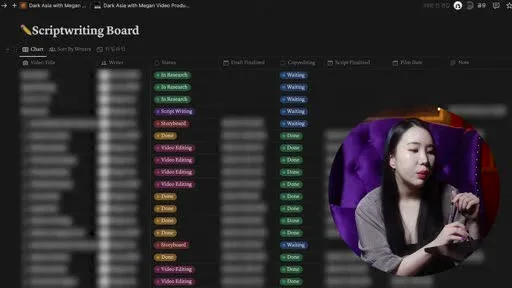
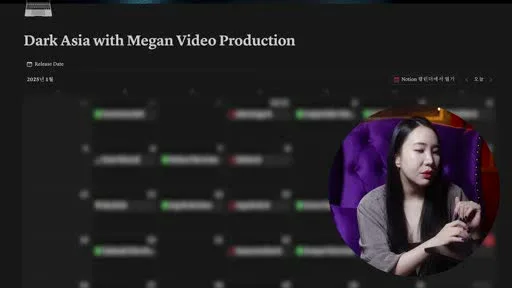
The clearest way to see this discipline in practice is inside a working channel’s own production pipeline. Megan of Dark Asia with Megan (1.23M subscribers) walked through her exact workflow in a Q&A video, and the specifics are worth more than the usual “research, then write” advice: every script starts with an idea — an audience suggestion, a news event, or a case the team picks — then moves into a research phase built around “reliable sources, legal documents, and survivor stories.” A writer drafts the script with facts and a timeline first, then builds a storyboard that pulls in crime-scene images and legal documents directly, and only after that does Megan step in to refine tone. The video then moves through tracked editing stages — editing, final review, published — before hitting a separate social-distribution schedule.
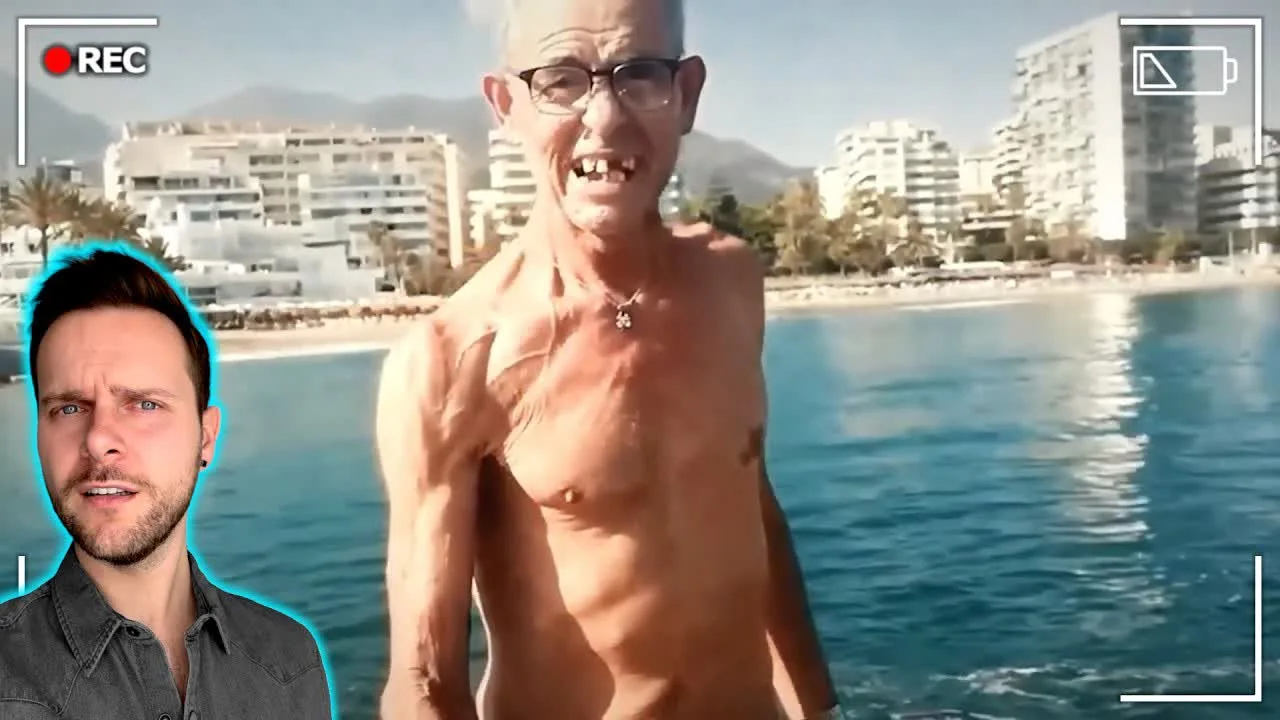
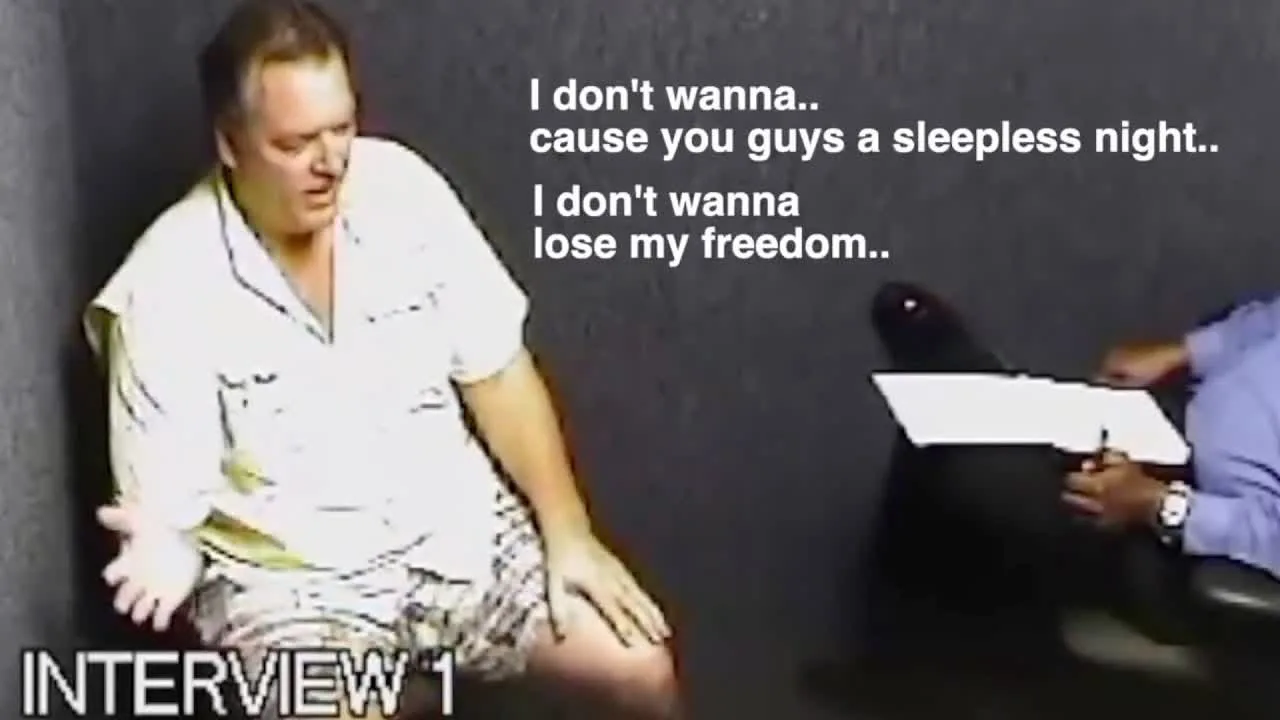
That pipeline is worth studying regardless of whether a creator ever appears on camera, and the largest channels in the niche prove the face isn’t the draw. Coffeehouse Crime, run by UK creator Adrian Stewart, has built 2.2 million subscribers around a case-deep-dive format narrated entirely off-camera. JCS – Criminal Psychology goes further — 5.64 million subscribers on a channel built entirely from raw police interrogation footage with analytical text overlays and no host voice or face at all, which is arguably the purest forensic-focus format on the platform.
| Format | Sourcing base | Yellow-icon risk | Best entry point |
|---|---|---|---|
| Case Deep-Dive | Archive photos, court docs, news reports | Moderate — thumbnail choice matters most | New channels |
| Cold Case | Investigative reporting, case files | Moderate — active cases need extra care | Recurring series |
| Forensic-Focus | Autopsy/DNA/ballistics reporting | Low — reads as educational by default | Ad-friendliness priority |
| Courtroom | Trial transcripts, public filings | Low — procedural framing throughout | Legal-research creators |
For creators weighing true crime against other faceless directions before committing, the broader list of faceless channel ideas is worth a look, and the Reddit-stories niche is a useful comparison point — it faces its own version of the same sourcing-and-permission question, just with living posters instead of victims’ families. On the money side, the full breakdown of how RPM actually gets calculated and the complete Partner Program requirements cover the mechanics this article only touches on for true crime specifically.
FAQ
Is true crime a good niche for a faceless YouTube channel?
Yes, structurally — it's one of the few genres where a narrated case can hold a viewer for 20-40 minutes without the creator on camera, which is exactly what YouTube's watch-time-driven algorithm and the 4,000-hour Partner Program threshold both reward. The tradeoff is higher moderation exposure than most faceless niches, so the format and sourcing choices matter more than usual.
Does YouTube demonetize true crime content?
Not automatically. YouTube's advertiser-friendly guidelines allow full monetization for educational or documentary-framed coverage of violence and tragedy, but graphic imagery — especially in a thumbnail or the first 15 seconds — routinely triggers Limited Ads or worse. Creators have also reported inconsistent enforcement, with previously-monetized, non-graphic videos losing full ad status on re-review.
What's the best true crime format for a new channel?
Case deep-dive is the easiest entry point — it's the most-searched format, works with archive photos and public court records, and doesn't require the ongoing-case sensitivity that cold cases do. Forensic-focus carries the lowest demonetization risk if ad-friendliness is the priority from day one.
Do I need permission from a victim's family to cover their case?
No — YouTube has no rule requiring family consent to cover a publicly documented case. That's a legal floor, not an ethical one; channels that last tend to hold themselves to a higher bar anyway, including honoring serious removal or correction requests from verified family members even without being obligated to.
How much can a true crime YouTube channel earn per 1,000 views?
Reported RPM for non-graphic, educational true crime content runs roughly $6-$9 per 1,000 views in one 2026 niche analysis, similar to other long-form YouTube categories. Actual RPM swings with a channel's ad-friendliness status, so a channel with frequent yellow icons will land well below that range regardless of view count.
The bottleneck is research, not the camera
A true crime channel lives or dies on sourcing discipline most creators only build after getting burned once. Longform Studio's research step attaches a citable source to every claim before it reaches the script, then carries that same script through storyboarding, consistent-character stills, and ElevenLabs narration — so the case that reaches your viewer is the one the court record actually supports.
Try Longform Studio$49/mo plus transparent per-dollar production costs. No markup on provider usage.