
Best Niche for YouTube: Ranked by RPM and Competition
The best YouTube niches ranked by RPM, competition, and longevity — with the data behind each and how to pick one you can sustain.
Two channels post the same week. One covers Minecraft builds, the other covers mortgage refinancing. Both land 60,000 views. The Minecraft channel clears about $150 from AdSense. The mortgage channel clears somewhere between $500 and $1,500 — and honest sources can't agree on exactly where in that range, which is itself the first thing worth knowing before you pick. Finding the best niche for YouTube isn't about finding the highest number on a chart. It's weighing three things at once — what the niche pays, how many creators are already fighting over it, and whether you can personally keep making videos in it for a year — and most “best niches” roundups only ever show you the first one.
This is a general ranking — face-on-camera and faceless both, because RPM doesn't care which one you pick, only the topic does. If you've already decided on faceless production specifically, the deeper, faceless-only version of this ranking — the best faceless YouTube niches, ranked by RPM — goes further into AI-production fit and YMYL scrutiny than this page needs to.
Key Takeaways
- Personal finance still tops every RPM table at roughly $8–$25, but three separate research sources disagree by a factor of 3 on the exact number — the disagreement itself tells you something about how to read niche-RPM claims generally.
- Skip niche-finder tools for the first pass. A 3-question filter — can you make 100 videos here, is anyone under 10K subs monetizing it right now, and is there real advertiser demand — answers “is this niche viable for me” better than any tool's ranked list.
- The highest-RPM niches (finance, legal, health, insurance) are also the hardest to break into as a new channel — YMYL ad-suitability review slows both discovery and demonetization appeals.
- One creator measured it directly: taking the identical video topic from 9 minutes to 32 minutes took his RPM from $4.00 to $9.14 — more than double, on the same subject, same channel, same week.
- Face-on-camera doesn't change your RPM ceiling. It changes which niches are physically possible for you to produce — RPM is set by topic and audience geography, not by whether anyone appears on screen.
The best niche for YouTube, ranked by RPM, competition, and sustainability
The figures below are aggregated across vidIQ, OutlierKit, and the AI-production-fit data used in our faceless-specific niche ranking, rounded to a range rather than a false-precision single number. “Sustainability” is our own call, not a market figure — it answers the first filter question below: can a solo creator realistically keep this format fed with ideas for a year.
| Niche | RPM range | Competition | Sustainable for a new creator? |
|---|---|---|---|
| Personal finance & investing | $8–$25 | Very high | Hard — needs constant new hooks to stand out |
| Legal & tax explainers | $8–$22 | Low | Yes — annual law changes refresh the topic list |
| Real estate & mortgages | $5–$17 | Low–medium | Yes — tracks rate cycles and local markets |
| B2B software & SaaS reviews | $8–$20 | Medium–high | Hard — tool churn, often sponsor-dependent |
| AI & technology (news-driven) | $4–$25 | High | Medium — fast decay, needs a weekly output habit |
| Health & wellness (science-based) | $4–$22 | Medium | Hard — credibility bar, heavy review scrutiny |
| Career & professional development | $5–$12 | Low | Yes — near-infinite evergreen topic surface |
| True crime & history | $3–$12 | Medium, getting crowded | Yes — deep, renewing source material |
| Fitness & beauty (usually on-camera) | $4–$12 | Very high | Medium — needs a visible, consistent presenter |
| Education / edtech explainers | $7–$11 | Low–medium | Yes — curriculum-sized idea bank |
| Gaming & general entertainment | $1–$5 | Extremely high | Medium — output volume matters more than depth |
What actually moves YouTube niche RPM, 2026
$1–$25
RPM range across the ranked niches above, before any single-video outlier
2.3x
RPM increase on an identical topic, going from a 9-minute to a 32-minute video
8,000 hrs
New YPP watch-hour bar for applicants from Feb 1, 2027 — double today's 4,000
Sources: vidIQ niche CPM/RPM data, 2026 · YouTube Partner Program eligibility
Why the highest-paying-niche numbers disagree
Search for the highest paying niche on YouTube and you'll get a different top number from every source. vidIQ's own 2026 niche breakdown lists personal finance at $15–$50 CPM, translating to roughly $5–$17 RPM. OutlierKit's independently gathered dataset puts the same niche at $10–$15 RPM, verified against creator-reported analytics rather than ad-market benchmarks. Neither is wrong. They're measuring different things.
The first gap is CPM versus RPM, and it's the single most common way a “best niche” article inflates its numbers. CPM is what an advertiser pays per 1,000 ad impressions; RPM is what actually lands in a creator's account per 1,000 views, after YouTube's roughly 45% cut and after views that never serve an ad at all get averaged in. A page quoting “$50 CPM” as if it were take-home pay is the reason finance-niche RPM claims range from $5 to $25 depending purely on which of the two numbers the source actually measured — the full mechanics of that split are in how YouTube RPM works.
The second gap is audience geography and season. Tier-1 audiences (US, UK, Canada, Australia) run 3–8x the RPM of Tier-3 audiences in the identical niche, and Q4 typically runs 30–50% above Q2/Q3 across every category. A finance channel reported at $25 RPM and one reported at $8 RPM can both be telling the truth about the same niche, on different viewer bases, in different months.
The honest takeaway: treat every single-number RPM claim — including the ranges in the table above — as a midpoint with real variance on both sides, not a guarantee. The ranking order between niches is far more reliable than any individual figure in it.
How to find the best niche for YouTube without guessing
Most “niche finder” tools do one thing: surface a list of topics ranked by search volume or estimated CPM. That tells you what pays, not whether you can actually build a channel there. Run every candidate niche through these three questions, in order — each one filters out a different failure mode, and a niche that fails any of them isn't worth the RPM number attached to it.
Can you make 100 videos here without repeating yourself?
Most channels don't die from bad RPM — they die from running out of things to say by video 40. A niche with a shallow idea pool burns out a solo creator long before the algorithm starts rewarding consistency.
Green light
Personal finance, history, true crime, career advice — the source material renews itself (new laws, new events, new case studies) faster than you can cover it.
Red light
A single-product review channel, or a hyper-specific hobby with maybe 30 real angles total. Great for a 12-video series, not a channel.
Is anyone actually monetizing this niche right now?
Ignore the giants — a 5M-subscriber channel proves the niche existed five years ago. Search the topic, filter results to the last week, and look only at channels under 10,000 subscribers. If small channels are still breaking out with fresh uploads, the audience is active and the algorithm is still recommending new entrants.
Green light
Small channels under 10K subs pulling real view counts on videos published this month — the door is still open.
Red light
Every result from the last 90 days belongs to a channel with 500K+ subscribers. The niche works, but not for a new account without a wedge.
What's the advertiser demand behind the topic?
This is the one number every other ranking leads with, and the one that means the least on its own. RPM tells you what advertisers will pay to reach your viewer — but only after you've confirmed you can produce the volume and there's still room to get discovered.
Green light
The topic sits next to a real purchase decision — a loan, a subscription, a diagnosis, a hire. That's what pulls premium CPM, not the subject matter's popularity.
Red light
High view counts with nothing to sell against them. Views without buyer intent cap out at the bottom of the RPM table regardless of volume.
Notice what this filter deliberately does not lead with: RPM. It's question three, not question one, because a high-paying niche you can't sustain or can't break into is worth less than a mid-paying one you can actually execute in for a year. That ordering is the entire argument of this article — and it's worth more than any tool's ranked output, because a tool can tell you the CPM on “credit card churning” but it can't tell you whether you have 100 videos of material in you on that topic.
This is also where production capacity quietly becomes a niche constraint. A creator who has to research, script, generate visuals, record narration, and edit separately for every video will run out of hours in a sustainable niche before running out of ideas. Longform Studio exists specifically to compress that: source-backed research straight into a sentence-editable script, consistent AI imagery per scene, and narration, so the bottleneck on question one — can you actually keep making videos here — moves from your calendar to your topic list.
The high-RPM niches worth avoiding anyway
The highest number on the chart isn't the best niche
Finance, legal, health, and insurance sit at the top of every RPM table for a reason — and that reason (YMYL: Your Money or Your Life) is also why a brand-new channel struggles there. These categories face stricter ad-suitability review, more manual policy checks, and slower, less successful demonetization appeals than a history or career-advice channel making the same production mistakes. High RPM and fast growth almost never coincide.The same YMYL mechanics apply whether or not a face is on camera — it's a full deep-dive in the faceless niche ranking's section on which high-RPM niches to avoid, so this page won't re-argue it in depth. The general version worth adding here: “AI & technology” and “true crime” are both showing up saturated in 2026 for a different reason than YMYL — reaction-format oversupply. When a topic trends, hundreds of channels post nearly identical videos within days, and the filter-by-last-week test in question two of the framework above will show you that saturation immediately if you run it before committing.
Face vs. faceless, concretely
RPM is set by topic and audience, not by whether a presenter is visible — a well-produced faceless finance explainer earns the same finance-tier RPM as a talking-head version of the identical script. What changes is which niches are physically reachable for you. Two real channels make the difference concrete.
Graham Stephan
Face-on-camera · personal finance · ~5.18M subscribers

- Top-tier RPM niche (personal finance), verified by his own on-screen presence
- Sustained output for years by treating himself as the recurring format
- Highest ceiling in the table, also the highest competition and YMYL scrutiny
Best for: Creators comfortable being the recognizable face of a high-RPM, high-competition niche.
Practical Wisdom - Interesting Ideas
Faceless · self-improvement & philosophy · ~1.04M subscribers

- Mid-RPM niche, low YMYL scrutiny, near-infinite evergreen source material
- Entirely narration-and-visuals, no presenter identity required at all
- Sits exactly in the 'sustainable for a solo creator' band of the ranking above
Best for: Creators who want the sustainability answer to matter more than the RPM ceiling.
The video-length effect from the key takeaways above came from Youri van Hofwegen, a creator with roughly 312,000 subscribers who tests his own RPM changes on-camera rather than citing third-party benchmarks. Worth watching directly for the dashboard screenshots.
His own channel-wide numbers, pulled directly from YouTube Studio in the video: $18.80 RPM across 8.2M views on his highest-CPM content over the last 365 days.
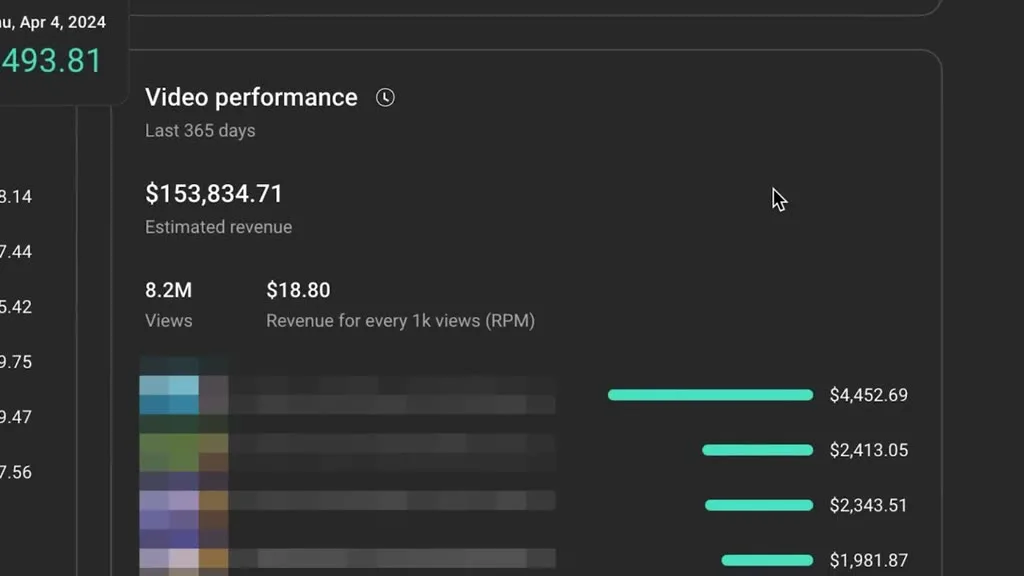
Then the length test itself — the same topic, published as a 9-minute video and again as a 32-minute video with proportionally more ad breaks. The longer cut's RPM, shown lifetime since upload:
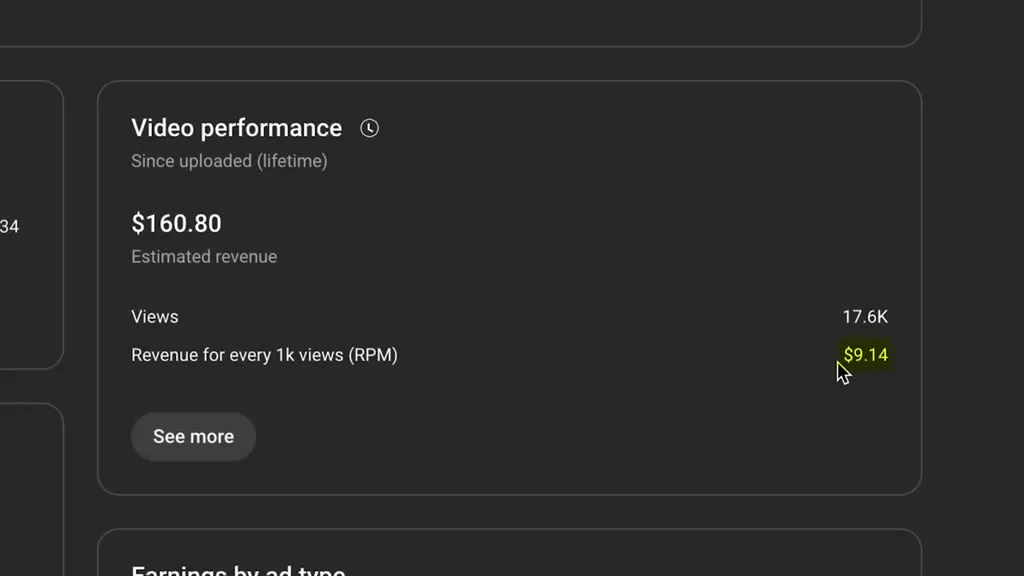
That's a lever worth knowing regardless of which niche you land on: length and ad-break count move RPM inside a niche almost as much as the niche choice itself does. For the mechanics of how much length actually helps and where it stops paying off, see how long a YouTube video should be for revenue specifically. If you're still deciding on the format itself before the niche, how to start a faceless YouTube channel covers the setup decisions, and 50 faceless YouTube channel ideas turns any row in the table above into an actual channel concept.
FAQ
What is the best niche for YouTube in 2026?
There isn't a single answer — it depends on whether you're optimizing for RPM ceiling, competition, or sustainability. Personal finance has the highest RPM ceiling ($8–$25) but the most competition and slowest trust-building for new channels. Legal/tax, career development, and history sit in a better starting band: strong RPM, low competition, and evergreen material a solo creator can sustain. Run any candidate through the 3-question filter above before committing.
What is the highest paying niche on YouTube?
Personal finance and investing consistently ranks highest across research sources, though the exact RPM figure varies by a factor of 2–3 between reports ($5–$25 depending on methodology and audience geography). Legal/tax education, real estate/mortgages, and B2B SaaS follow closely behind with meaningfully less competition than finance.
Is there an actual YouTube niche finder tool worth using?
Tools like vidIQ and OutlierKit are useful for surfacing CPM estimates and outlier videos, but none of them can tell you whether you can personally sustain 100 videos in a niche or whether small channels are still breaking through right now. Use a tool for the RPM data, then run the niche through the 3-question filter in this article before deciding — the filter catches viability problems a ranked list never will.
Does a faceless channel earn less than a channel with a visible host?
Not directly. RPM is driven by topic and audience country, not by whether a presenter appears on screen — a well-produced faceless finance explainer earns the same finance-tier RPM as a talking-head version of the identical script. What changes is which niches are practically reachable without an on-camera presenter, not the pay for any given niche.
How many watch hours do I need before a new niche starts paying?
Today's YouTube Partner Program threshold is 1,000 subscribers with 4,000 valid public watch hours in the last 12 months (or 1,000 subscribers with 10 million Shorts views in 90 days), per YouTube's own eligibility page. YouTube announced on August 10, 2026 that new applicants starting February 1, 2027 will need double that: 8,000 watch hours or 20 million Shorts views. Existing partners are grandfathered in under the current terms.
Picked a niche. Now you need 100 videos in it.
RPM tells you what a niche pays. Production tells you whether you can actually sustain it. Longform Studio handles research, sentence-level scripting, consistent AI imagery, and ElevenLabs narration in one workspace built for 8–30 minute videos — so the bottleneck moves from your calendar to your topic list.
Try Longform StudioNo markup on provider usage.