
What Is YouTube Automation? How It Really Works in 2026
What is YouTube automation, really? A cost-by-cost breakdown of the actual workflow, who profits, and what 'automated' means when humans still approve every step.
Search "what is youtube automation" and the first five results are course landing pages, and the CPC on that phrase is around $39 — someone is paying nearly forty dollars every time a person clicks through wondering what this actually is. That should tell you something before you read a single word of copy: the honest answer is worth less to advertisers than the confused one, because confusion sells a $997 course and clarity doesn't.
So here's the honest answer. YouTube automation is a production model where one person directs a channel — picks the topic, approves the script, signs off on the visuals — without appearing on camera or doing every task by hand themselves. The "automation" is in the labor, not the decisions. Nobody has built a system that researches a topic, writes a defensible script, and uploads a finished video with zero human judgment in the loop, and if a course is selling you that, it's selling you a lie with better marketing than the truth has.
Key Takeaways
- YouTube automation is a production model, not zero effort — a human still approves the topic, script, and final cut at every one of the six pipeline stages.
- The freelancer-only route runs $1,200–$7,000 per video; the AI-tool route runs $100–$400 — that gap is why solo creators shifted to AI-assisted production.
- The keyword "what is youtube automation" carries roughly a $39 CPC — a strong signal that confusion is more profitable to advertisers than a clear answer.
- YouTube's July 2025 "inauthentic content" policy update specifically targets mass-produced, repetitive automation — real human review is what keeps a channel monetizable.
- One documented channel spent ~$75 on its first video and grew to 50,000 subscribers and $110,000+ in three months — real numbers, not a course promise.
The numbers behind the sales pitch
$39
Average CPC on “what is youtube automation”
$1,200–$7,000
Cost per video, fully outsourced to freelancers
$100–$400
Cost per video, AI-tool route with your own review
$2–$8
Typical long-form RPM (finance/business at the high end)
Sources: YouTube Partner Program policy
YouTube Automation Meaning: What the Word Actually Covers
The term gets used two different ways, and mixing them up is where most of the confusion starts.
Sense one is the legitimate one: a faceless channel run like a small production company. One operator, a mix of freelancers and AI tools, a repeatable process. Channels like this exist across finance explainers, history documentaries, true crime recaps, and tech news — and plenty of them make real money by treating each video as a product with a budget, not a gamble. The Infographics Show (~15.5M subscribers) has run this model for general explainer content for over a decade; Fascinating Horror (~1.45M subscribers) does the same for narrated history and disaster documentaries. Neither hides that a real person runs the channel — they just don't appear on camera.
Sense two is what the course industry sells: "set it and forget it," a done-for-you system where you allegedly never touch the channel after setup. This is the version YouTube's policy team has been actively fighting. In July 2025, YouTube renamed its "repetitious content" policy to "inauthentic content" specifically to catch channels using this model — the update clarifies that content "mass-produced, generic, repetitive, or manipulative" is ineligible for monetization, full stop, even if every individual video is technically original. The two senses share a name. They do not share an outcome.
Sense One: The Real Model
A faceless channel run like a small production company
- One operator directs every stage
- Freelancers or AI tools do the labor
- Human approves topic, script, and final cut
- Real examples: The Infographics Show, Fascinating Horror
Best for: Operators who treat each video as a product with a budget.
Sense Two: The Course Fantasy
"Set it and forget it" — done for you, never touched again
- Sold as zero-touch after setup
- Exactly what the inauthentic-content policy targets
- No human review of script or scenes
- Produces the content that gets demonetized
Best for: Nobody — it doesn't survive contact with the policy or the RPM math.
How Does YouTube Automation Work? The Actual Pipeline
Strip away the sales pitch and every legitimate automated channel runs the same six stages. What varies is who or what does each one.
Research
Someone decides what the video is about and gathers the facts, sources, and angle. This is either a freelance researcher, the channel operator using AI search tools, or a purpose-built research workflow that cites sources as it goes rather than hallucinating them.
Script
The research becomes a narration script — structured, paced for a target runtime, written to be heard rather than read. This is the single most consequential stage: generic listicle-voice AI output is exactly what gets a channel flagged as inauthentic. A script a human edits sentence by sentence is what survives.
Voice
The script gets narrated — a real voice actor, or a synthetic voice from a tool like ElevenLabs. Neither is inherently more "automated" than the other; both are just delivery mechanisms for the same script.
Visuals
Stills, motion graphics, or stock footage get planned and generated to match the narration's pacing. AI image generation makes consistent, on-topic visuals possible per scene, but "possible" and "good" are different claims — most of what gets called AI slop is this stage done carelessly.
Edit
Someone assembles voice, visuals, music, and pacing into a finished cut — captions, transitions, sound design, a thumbnail. This is where a lot of the actual craft still lives, automated or not.
Upload and optimize
Title, description, tags, thumbnail testing, publish scheduling. The most genuinely automatable stage, and the one that matters least to whether the video is any good.
Nowhere in that list is there a step where nobody decides anything. "Automated" channels that actually make money have a human approving the topic, the script, and the final cut — the automation is in not having to personally record the voice or hand-animate every scene.
What YouTube Automation Actually Costs, Stage by Stage
This is the part course funnels skip, because "$500 a month in tools plus your time" doesn't close as well as "start earning passive income with zero experience." Real per-video numbers, freelance route versus AI-tool route:
| Stage | Freelancer cost (per video) | AI/tool cost (per video, amortized) |
|---|---|---|
| Research | $30–$80 (contract researcher) | Included in an AI research workflow, or a few dollars in API/tool time |
| Script | $500–$5,000 for a long-form documentary-style script | $10–$30 in AI generation/editing time, plus your own editing hours |
| Voice | $300–$600 for a 5–10 minute narration from a professional voice actor | ElevenLabs Creator plan is $22/month for 100,000 characters — roughly 3–4 long-form scripts, so $6–$8/video at that tier |
| Visuals | $200–$800 for custom illustration or stock licensing across a 15–20 scene video | A few cents to a couple of dollars per generated image at current API pricing; $20–$60/video for a fully custom set |
| Edit | $200–$600 for a mid-level freelance editor on a 10-minute video | Varies widely; assembly tools cut hours but rarely eliminate the edit pass entirely |
| Total per video | $1,200–$7,000+ | $100–$400+, plus real hours of human review |
The freelancer route is a real small-business cost structure — this is why agencies that fully outsource automation channels often lose money on anything under a few thousand views. The AI-tool route is what actually made this model viable at solo-creator scale, and it's also why "just use AI for everything" is the load-bearing promise of every course — it's the one part that's genuinely true, just wildly oversold on what it means for quality and monetization risk.
The line item no course prices
What's missing from both columns: your own time reviewing every script and every scene, because skipping that review is exactly what produces the "generic, repetitive, or manipulative" content YouTube now demonetizes on sight.Who Actually Profits From YouTube Automation
Two different businesses hide under one search term, and only one of them depends on channels succeeding.
Course sellers profit from enrollment, not from your channel's watch hours. Their incentive is a compelling promise and a low support cost — hence "faceless," "passive," "AI does the work" messaging that's technically-not-false and practically misleading. A $39 CPC only pencils out if the backend product costs hundreds or thousands of dollars, which tells you the entire funnel is priced around extracting tuition, not around what a beginner channel realistically earns in year one.
Channel operators profit from ad revenue, sponsorships, and eventually selling the channel itself — all of which require the channel to actually perform, which requires the video to actually be good, which is the thing the course funnel has the least incentive to tell you is hard. Real RPM (revenue per thousand views) for long-form content typically runs $2–$8 depending on niche, with finance and business content at the high end and gaming or kids' content well under $1.50. Do the math against a $1,200–$7,000 fully-outsourced production cost and it's obvious why most successful automation channels shift toward the AI-tool column over time — not because it's trendy, but because the freelancer-only version doesn't survive contact with actual RPMs until a channel is already large.
What that actually looks like, run by one person instead of averaged into an industry statistic, is worth watching rather than taking on faith. DIGITAL INCOME PROJECT's The TRUTH about YouTube Automation (actual results) walks through two channels the creator actually ran.
The first channel, a compilation account, hit 30,000 subscribers and 12 million views but couldn't get monetized at all — repurposed content without "significant original commentary" is exactly what the reused-content policy above excludes — and was eventually sold off for about $3,000. The second attempt, a finance-niche channel built with a hired editor plus AI-generated script and voiceover, cost about $75 all-in for the first video. That's not a course's promised number — it's the creator's own line-item total for editing, thumbnail, and AI narration on one video, and it lands inside the $100–$400 AI-tool range in the table above, not the freelancer range.
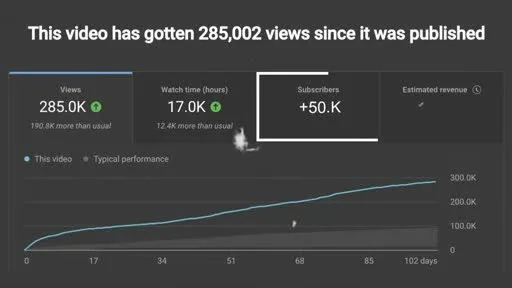
The channel that eventually worked for them is the current one: 50,000 subscribers in three months and over $110,000 from AdSense alone, shown on-screen as a YouTube Studio analytics readout rather than claimed in a testimonial. The gap between that channel and the failed $75-cost one isn't the tools — it's everything the tools don't do: niche selection, a brand worth returning to, and, as the creator puts it,
The only thing that's really different about YouTube automation versus a normal YouTuber is that you're not on camera but you still have to manage everything else.
— DIGITAL INCOME PROJECT
If you're evaluating whether this model is worth pursuing at all, is YouTube automation legit goes deeper into where the model breaks versus where it holds up.
The Monetization Rules Nobody in the Ads Puts in Writing
YouTube's policy is more specific than "don't use AI," and it's worth reading in its own words rather than a course's summary of it. Content is ineligible for monetization if it's "mass-produced, generic, repetitive, or manipulative" — that's the inauthentic content standard in YouTube's own channel monetization policies, and it applies regardless of whether a human or a model produced the words. Separately, reused content — repurposing material already on YouTube or elsewhere "without adding significant original commentary, substantive modifications, or educational or entertainment value" — is ineligible even with the original creator's permission, because that policy sits apart from copyright entirely.
Where AI specifically crosses the line
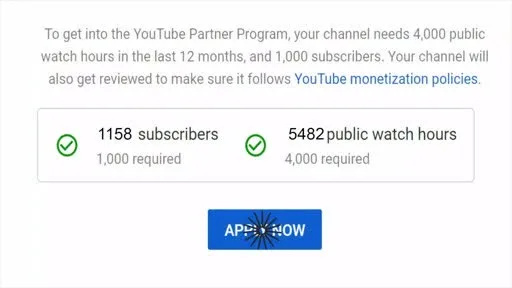
YouTube's own guidance draws the line at originality: AI tools are fine to use, but "the final product must still demonstrate your creative vision and provide educational or entertainment value." Channels built entirely from AI personas delivering advice on sensitive topics — health, legal, financial, political — are ineligible outright, no exceptions for disclosure.There's also a bar-raising change worth knowing about if you're timing an entry into this space: as of August 2026, YouTube announced that Partner Program eligibility will require 8,000 qualified watch hours in the past year (up from 4,000) starting February 1, 2027 — a straight doubling, alongside a jump to 20 million Shorts views for the Shorts pathway. If you're planning an automation channel as a long game rather than a quick flip, that number is the one to plan against, not the current 4,000-hour bar.
None of this makes automation against the rules. It makes low-effort automation against the rules, which is a different and much narrower thing.
What "Automated" Actually Means in Practice
By the time you strip out the marketing, here's what separates a channel that survives from one that gets quietly throttled: the human is still making every decision that determines whether the video is good. What's automated is the labor of execution — not having to personally voice every episode, not spending four hours hand-placing stock footage, not writing research notes from scratch every time.
That's also roughly the design behind how to start YouTube automation as a workflow rather than a shortcut, and it's the gap that AI tools for YouTube automation exist to close on the production side — tools that speed up execution without removing the review step that keeps a channel monetizable.
This is also the specific problem Longform Studio is built around: one workspace where research, script, visuals, and narration happen in sequence with your approval at each stage — source-backed research so nothing is fabricated, sentence-level script editing so the final voice is yours, per-scene regeneration so fixing one shot doesn't mean re-rendering the whole video, and dollar costs instead of opaque credits so you know what a video actually cost before you upload it. It's built for the channel-operator version of this model, not the "never touch it again" version — because that version doesn't survive the policy or the RPM math anyway.
If your channel doesn't show a face and you're wondering whether "faceless" and "automated" are the same thing, they overlap but aren't identical — see what is a faceless YouTube channel for where they diverge. And if you're ready to see what a source-backed, human-approved production workflow actually looks like end to end, Longform Studio is built for exactly that.
FAQ
Is YouTube automation legal?
Yes. Nothing about outsourcing script writing, voice work, or editing — to freelancers or to AI tools — violates YouTube's terms of service. What violates policy is the output: content that's mass-produced, generic, or reused without meaningful original contribution, regardless of who or what assembled it.
Can you actually make money with YouTube automation?
Some channels do, and many don't — the split usually tracks production cost against realistic RPM. At $2–$8 RPM for long-form content, a video costing $1,200–$7,000 from an all-freelancer team needs a large audience to break even, while operators who do their own research and script review with AI-assisted production have a much lower cost floor and reach profitability faster.
Do you need to show your face for YouTube automation?
No. Most automation channels are faceless by design — narrated over stills, motion graphics, or stock and AI-generated visuals. Faceless and automated are related but not the same thing: a faceless channel can be entirely hand-made, and a channel with an on-camera host can still outsource research and editing.
Does YouTube ban AI-generated videos?
No, but it restricts what gets monetized. AI-generated content is eligible for ads if it demonstrates real creative vision and adds educational or entertainment value; generic AI content mass-produced from templates is not, and channels using AI personas for sensitive-topic advice are ineligible outright.
How much does it cost to start a YouTube automation channel?
Per video, expect $1,200–$7,000 if you outsource every stage to freelancers, or roughly $100–$400 in tool costs if you do research and script review yourself and use AI tools for voice and visuals — plus the hours you spend approving and editing each stage, which don't show up on an invoice but are what keeps the channel monetizable.
Stop paying $39 a click to learn what automation actually costs
This article just showed you the real math: $1,200–$7,000 fully outsourced, or $100–$400 with AI tools and your own review at every stage. Longform Studio is built for the second number — research, script, visuals, and narration in one workspace, with your approval at each step and dollar costs instead of opaque credits.
Try Longform StudioNo markup on provider usage.